
Committee narrows review and adds local‑appeal right in contingent‑fee contract bill; AG transparency amendment fails
Get AI-powered insights, summaries, and transcripts
Subscribe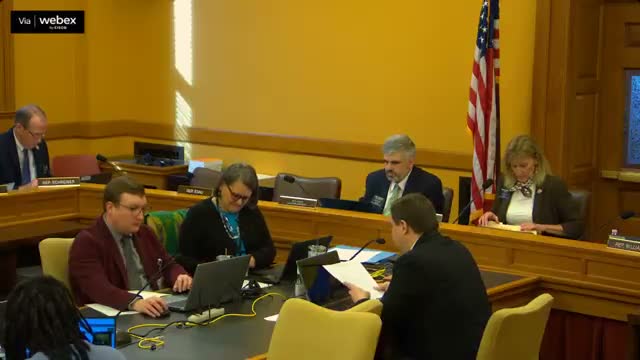
Summary
The Judiciary Committee amended HB2593 to add a district‑court de novo appeal for local political subdivisions when the Attorney General disallows contingent‑fee legal contracts; an amendment that would have applied the bill’s transparency requirements to the Attorney General failed 6–9; the committee passed the bill favorably as amended.
House Bill 25‑93, a proposal from the Attorney General’s Office addressing contingent‑fee legal contracts, moved through the House Judiciary Committee after the panel adopted and rejected competing amendments.
Jason Thompson of the Revisor’s Office told lawmakers the bill would require political subdivisions to hold open‑meeting consideration, provide qualifications and contract information and submit contingency‑fee contracts to the Attorney General for review before those contracts become effective.
Representative Vaughn offered amendments intended to respond to municipal concerns and to preserve local autonomy. The committee adopted a Vaughn amendment that incorporated language recommended by the League of Municipalities and allowed a political subdivision to appeal an AG refusal to the district court for de novo review rather than under the Kansas Judicial Review Act. Supporters, including Representative Carmichael, said district‑court de novo review prevents the attorney general’s office from being the final arbiter in disputes that directly affect local governments.
Vaughn later proposed a second amendment that would have extended the bill’s notice and disclosure requirements to the Attorney General’s office itself (including a written finding before contracting, public posting of contracts and an annual report to the legislature). The committee rejected that amendment in a hand count reported as 6–9.
Following debate, the committee voted to pass HB25‑93 favorably for passage as amended. Several members asked that their votes be recorded in the minutes. The bill will move to the House floor with the district‑court appeal provision included.