Get Full Government Meeting Transcripts, Videos, & Alerts Forever!
Get email alerts on the Groundwater Wells topic
No spam. Unsubscribe anytime.
Stafford residents say wells ran dry after nearby development; supervisors ask staff to probe
Summary
Dozens of Clark Patton Road residents told Stafford supervisors they have lost well water since nearby construction began, saying many face $20,000 replacement bills; the board directed staff to pull proffers, review permits and consider potential fee relief while investigating causes.
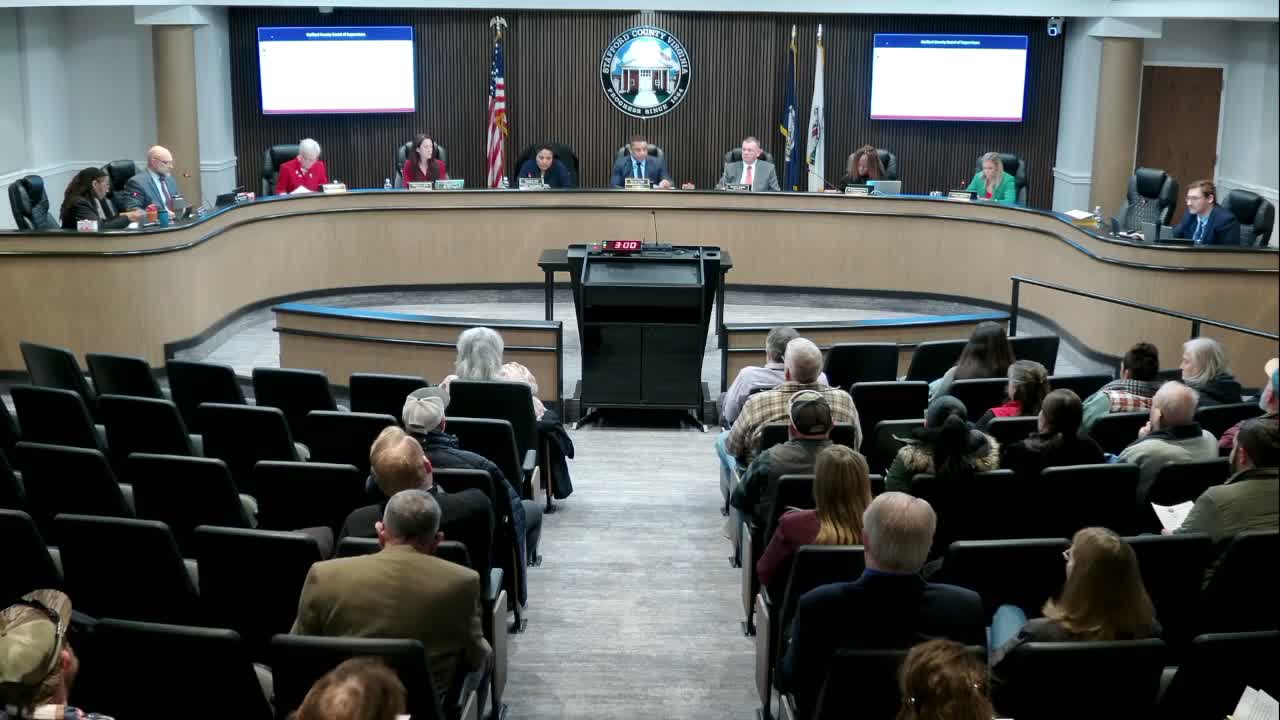
Dozens of residents from Clark Patton Road and nearby streets told the Stafford County Board of Supervisors on Dec. 16 that their private wells have gone dry after nearby construction, pressing county leaders for a fast technical review and immediate relief.
"Our wells are going dry," said Christopher Kearns of Hartwood District during the public‑comment period, describing households that have spent "over $20,000 plus a $300 county permit fee" to replace wells. April Kearns, who said her street is older and low‑depth wells have failed, told the board the exact replacement estimate she had been quoted: "$20,382.25 plus a $300 county fee is ridiculous."
The speakers linked the losses to recent development in the area (the Westlake subdivision and nearby projects) and urged the board to hold developers responsible or to provide county assistance. Several other neighbors testified they have experienced intermittent pressure, damaged well pumps and abrupt loss of water.
Why it matters: Many of the homes on Clark Patton Road have comparatively shallow wells that residents said have functioned for decades; an abrupt set of failures in multiple adjacent households raises questions about whether nearby land disturbance altered recharge pathways or lowered the local water table. Replacing a well can be a five‑figure cost that residents said they cannot absorb.
What the board did: Supervisors discussed near‑term steps the county can take. Supervisor English pressed staff to examine the historical Westlake approvals and whether legal proffers, required water‑infrastructure commitments or bonds exist that could be used to extend water service or mitigate the damage. County staff and legal advisors were directed to:
- Pull and deliver existing Westlake proffers and related rezoning documents for board review; - Review MS4 (stormwater) permitting and on‑the‑ground erosion/inspection records for the development; and - Propose options the board could legally take, including fee waivers, targeted reimbursements, or expedited utility connections, noting state limitations on selective fee waivers.
County staff, legal counsel and affected supervisors said they will return with recommended next steps. "We need to determine a causal relationship between the problem and the project," one staff member said; county counsel added that because Virginia is a Dillon‑rule state the board’s options for direct remediation can be limited.
What residents asked for next: Residents asked the county to (a) investigate with hydrology and permitting records, (b) identify any developer proffers or bonds that could pay for utility extensions, and (c) consider suspending or refunding the $300 well‑permit fee while the county investigates. Supervisors instructed staff to pull records and return with options before their next scheduled follow‑up meeting.
Next steps: Staff will compile the proffers, permit review and MS4/inspection records and advise whether short‑term relief (fee waivers or connection assistance) is legally and fiscally available; the board also signaled it will consider directing a technical hydrology review if evidence warrants it.