Get Full Government Meeting Transcripts, Videos, & Alerts Forever!
Get email alerts on the Waste Management topic
No spam. Unsubscribe anytime.
Philadelphia council hears hours of testimony on 'Stop Trashing Our Air' bill and holds measure for more review
Summary
Council heard extensive public testimony for and against bill 250768, with Chester officials, residents and health advocates urging a ban on sending Philadelphia trash to Chester's incinerator and company representatives and unions warning of job and procurement impacts. Councilmember Jamie Gauthier announced the bill would be held for further work.
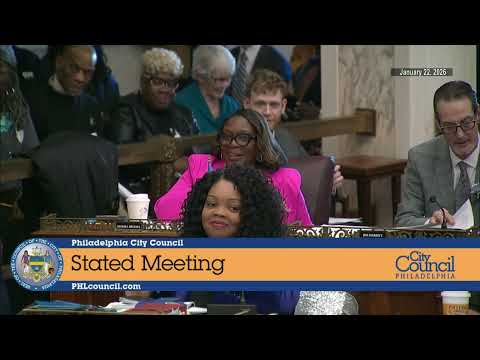
Philadelphia City Council on Jan. 22 heard more than an hour of public testimony on the Stop Trashing Our Air Act (bill 250768), a proposed ordinance that would limit or prohibit the city’s use of nearby waste-to-energy facilities, and then voted to hold the bill for further review.
Mayor of Chester Stefan Roots urged council to act, saying his city has borne decades of industrial pollution and asking members to treat the issue as a moral choice: "Vote yes," he said, urging Philadelphia elected officials to decline to send trash to Chester. Dozens of Chester residents and regional health advocates followed with personal testimony about asthma and other illnesses they link to the incinerator’s presence.
Company representatives from ReWorld/Covanta and allied speakers pushed back, citing compliance with federal permits and local jobs. ReWorld facility manager Alex Piscatelli told the chamber the plant consistently operates "60 to 90% below those standards" under the Clean Air Act, and an operations representative and union leaders warned that removing a qualified bidder from a city procurement could cost up to about 120 family-sustaining jobs.
Councilmember Jamie Gauthier, who led the post‑testimony remarks, said colleagues had requested more time to consider procurement, labor, and equity implications and that he would "hold the bill for today" to allow additional review and discussion. He framed the pause as an opportunity to further reconcile environmental justice concerns with procurement fairness and regional energy and waste-management needs.
The public comment portion included a mix of advocacy groups, medical professionals, union representatives and company officials. Environmental and public‑health speakers cited studies and local health statistics linking particulate pollution and other emissions to asthma and cancer; ReWorld representatives and other industry witnesses disputed some of those analyses and called for more rigorous technical review of comparative greenhouse‑gas and public‑health impacts.
Next steps: the bill was not taken to a vote; the sponsor and committee members signaled they would continue work with stakeholders before further action. Council did not adopt any procurement changes during the Jan. 22 session.
The testimony and the decision to hold the bill underscore the complex tradeoffs the City faces between regional waste management, labor and procurement rules, and health and environmental justice concerns.