Lifetime Citizen Portal Access — AI Briefings, Alerts & Unlimited Follows
Guam panel hears nomination of Dr. Ricardo Eusebio; nominee urges foreign‑licensure law to ease physician shortage
Loading...
Summary
The Committee on Health and Veterans Affairs heard testimony Feb. 17 on Dr. Ricardo Eusebio’s nomination to the Guam Board of Medical Examiners; supporters cited his 30+ years of clinical and administrative experience, and Eusebio urged passage of a foreign medical licensure bill to help recruit doctors to the island.
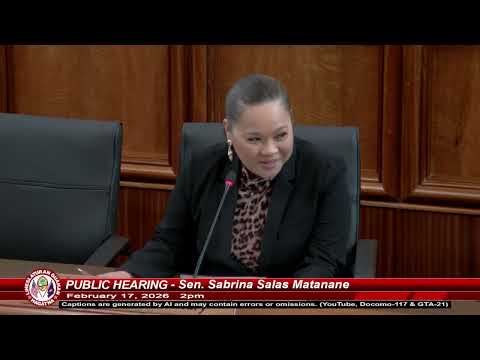
The Committee on Health and Veterans Affairs met Feb. 17 to consider Governor Lilian Guerrero’s nomination of Dr. Ricardo Eusebio to the Guam Board of Medical Examiners as the Guam Memorial Hospital Authority’s medical director representative. Committee members and agency staff praised Eusebio’s long career and asked how he would address complaints, transparency and workforce shortages.
Brianna Sublan, acting administrator of the Health Professional Licensing Office at the Department of Public Health and Social Services, testified in support of the nomination. “On behalf of the Department of Public Health and Social Services and its Health Professional Licensing Office, we fully support his appointment,” Sublan said, citing Eusebio’s credentials as a board‑certified general surgeon, a George Washington University School of Medicine graduate and a fellow of the American College of Surgeons.
Dr. Eusebio told the committee he grew up in Guam, trained in surgery, served in the U.S. Navy and has held administrative roles at Guam Memorial Hospital. He described previous service leading the licensure board and said he accepted the GMHA medical‑director role in part to advance legislation he believes will improve care on the island.
“The sooner we get it, the better it is,” Eusebio said of a foreign medical licensure measure designed to create pathways for international medical graduates to practice in Guam. He said the bill would allow GMHA and other local employers to recruit physicians from the Philippines, Japan and Taiwan and make Guam more competitive for clinicians.
Committee members questioned Eusebio about public trust and disciplinary processes following repeated public complaints. Eusebio said licensure procedures have become more transparent and that the board has been acting more swiftly, while also acknowledging past miscommunication and saying he lacked case‑level data in at least one high‑profile complaint. When the committee raised the case of David Lubovsky, who has for years sought action related to his son’s death, Eusebio said he was not privy to the details and could not comment on that specific matter.
Senator Titegui, who led several questions, described the J‑1 Conrad waiver that already exists at the federal level and said the local bill would not create a new visa program but rather codify recognition and definitions so the Guam Board of Medical Examiners can recognize certain foreign graduates. “We are not creating a program. It’s already been created,” she said, urging clarity about how the local measure would align with federal visa rules and FSMB guidance.
Eusebio described substantive policy differences between the governor’s version and the legislature’s draft—such as the length of post‑placement observation and whether a foreign licensure pathway permits full practice—and said the Federation of State Medical Boards had advised that physicians be treated equally across license types. Brianna Sublan told the committee the FSMB annual dues are $2,400.
The nominee also addressed conflicts of interest and malpractice coverage. Asked whether he would recuse from cases involving colleagues, Eusebio said, “If there’s an issue that I feel that I have a conflict of interest in, there’s no question I’ll step aside.” He said malpractice premiums in Guam are “extremely high,” noted that GMHA provides malpractice coverage for employed physicians while many in private practice lack insurance, and suggested exploring ways to provide malpractice protections to clinicians.
The committee did not vote at the hearing. Chair closed the session and said members will complete a committee report to place the nomination on the March legislative session agenda. Proceedings were adjourned at 2:36 p.m.