Pike County court says it only authorized exploration of private landfill; no site approval given
Loading...
Summary
Judge Jones told about 300 residents the fiscal court has not approved construction of a landfill at Myra, outlined three costly options (expand, close, or private partnership) and described the legal and technical steps a private operator would still have to satisfy before any site approval.
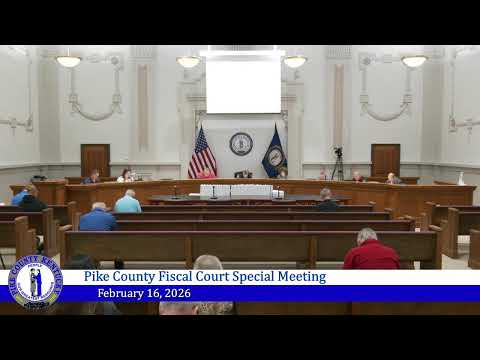
Judge Jones told a packed special called meeting on Feb. 13 that the Pike County Fiscal Court had not authorized construction of a landfill in Myra and had only authorized negotiations for a possible host agreement after receiving a single proposal. "The fiscal court has not authorized anybody to build a landfill," he said, adding that the court had voted in open session to solicit proposals, accepted one proposal and authorized him to negotiate a host agreement to allow the company to explore feasibility and apply for state permits.
Why it matters: The county’s existing landfill opened in 1993 and, Judge Jones said, has accepted interstate waste for decades to help offset costs. The court faces three difficult choices: expand the current landfill (most recent estimate about $18 million), close it (estimated $6 million closure cost), or partner with a private operator to build a new facility. Each carries large financial tradeoffs for residents, he said, particularly because bond terms could outlast the useful life of an expansion.
What the judge told residents: Jones outlined the legal and technical guardrails that remain. He said engineers must determine whether the Myra site is feasible from engineering and environmental perspectives and whether a project is economically viable before any administrative permit would be filed. He cited the county’s procurement and open-meetings process and said the state law allows executive-session negotiation of proprietary economic-development information under KRS chapter 61. "If they apply for an administrative permit, there's a public hearing, public comment period," Jones said.
Numbers and timeline: Jones said the current landfill opened in 1993 and has been receiving waste for about 34 years. Short-term emergency work funded by the state — a roughly $4.7 million injection — will provide about six to seven years of additional airspace, he said. He warned that an expansion previously estimated at $6–7 million in 2019 has grown to as much as $18 million in recent engineering estimates and that no local firms bid on the expansion contract. The court earlier obtained approval to issue a $10 million bond toward an expansion, Jones said, but financing the remainder could leave residents paying a 30-year debt for a 15-year capacity gain.
Private operator and operations: Jones described the company that proposed the private landfill as experienced and said its representative (Jonathan Murray, presented in the court slides) has landfill credentials and operations experience. He summarized the firm’s proposed handling methods — sealed 106-ton rail cars sprayed with an odor-control coating, enclosed unloading, leachate treatment and onsite controls — and said the company told the court it would accept up to 65,000 tons a year of county waste for free if a facility were built. Jones said Pike County currently disposes roughly 50,000 tons per year.
Community concerns and process: Multiple residents pressed the court in the public portion of the meeting; the judge repeatedly said no public comments would be taken at this special call because the court had other business to address and some officials had appointments. Commissioners said candidates who have pledged 'no landfill' should explain how they would pay hundreds of thousands of dollars in alternate costs to haul or close the landfill. One attendee apologized publicly after a social-media post that included a threat; the court said it would pursue enforcement if the threat could be attributed.
Next steps: Jones said the host agreement only permits the company to investigate feasibility and does not approve a site. Any administrative permit application would trigger public hearings and would still require county site-approval under the court’s site ordinance. If any company files an application, the court indicated it would return to the public with more information and that a future fiscal court — not the current administration — would make any final site decision.