Get Full Government Meeting Transcripts, Videos, & Alerts Forever!
Get email alerts on the Abortion Reporting topic
No spam. Unsubscribe anytime.
Committee backs repeal of statutory abortion reporting to state registrar amid split testimony
Summary
The committee voted to advance SB 30, which would repeal a 49‑year‑old requirement that induced abortions be reported to the state registrar; proponents said the reporting poses risk to providers and offers no public‑health benefit, while opponents warned repeal would remove transparency and hamper detection of trafficking and abuse.
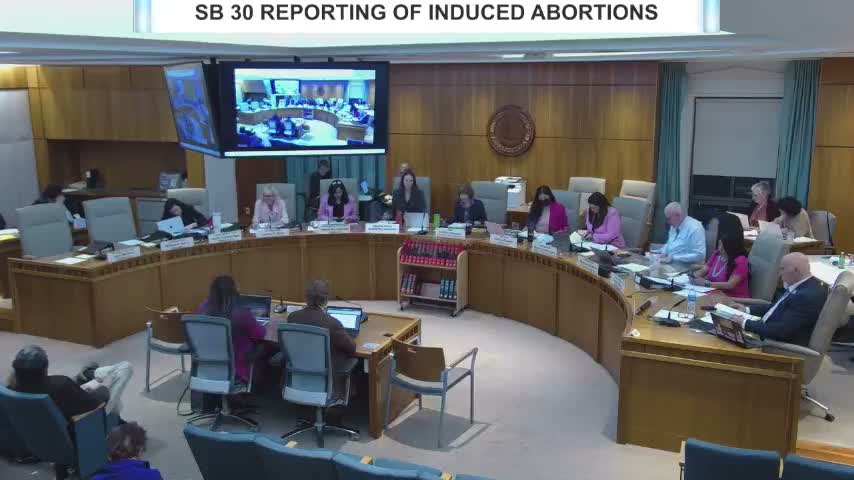
A House committee voted Feb. 17 to advance Senate Bill 30, which would repeal the state statutory requirement that each induced abortion be reported to the state registrar. The committee approved a 'do pass' motion, 6‑3.
Representative Anya Nordno, the bill sponsor, told members the 49‑year‑old reporting requirement discloses provider identity and creates a system of surveillance without medical necessity. "We don't track tonsillectomies, hysterectomies, or vasectomies, so why should we track abortions?" the sponsor said, arguing repeal reduces provider risk and affirms that abortion care is statutory health care.
Opponents said reporting helps detect trafficking and abuse and produces aggregate information for public‑health oversight. A series of public commenters—including local residents and survivors—told the committee repeal could reduce avenues to identify victims of coercion or trafficking.
Experts said the state registrar's form contains demographic categories (age, marital status, education, residence, Hispanic origin and other fields) and that while patient names are not included the data can be identifying in small communities; witnesses also said much of the aggregate data is available through research organizations (e.g., Guttmacher) and that state reporting has not produced a public report since 2019.
Representative Romero moved the 'do pass' motion and Leader Sapanski seconded; the clerk recorded six yes votes and three no votes, advancing the bill to the next stage.