Get Full Government Meeting Transcripts, Videos, & Alerts Forever!
Get email alerts on the Housing topic
No spam. Unsubscribe anytime.
Newark details housing element goals, affordable housing projects and homelessness response
Summary
Community Development Director Steven Turner said Newark’s state‑certified housing element requires planning for 1,874 units through 2031; staff highlighted an inclusionary housing requirement in development, a renter‑inspection pilot, and Cedar Community Apartments — a state‑funded conversion by Abode supported with roughly $36 million in grants to provide permanent supportive housing.
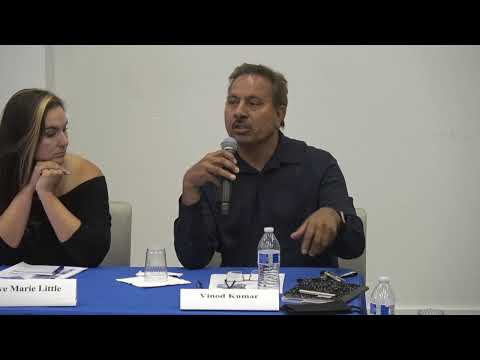
At a candidates’ briefing, Community Development Director Steven Turner and Recreation Director Nick Cuevas described Newark’s housing priorities including the recently adopted, state‑certified housing element and local homelessness efforts.
Turner said the city’s housing element requires planning for 1,874 housing units over the eight‑year planning period to 2031 and noted the element contains more than 40 new policies and programs. “The city needs to plan for 1,874 new housing units over the next 8 years to 2031,” Turner said, adding the role of the housing element is to ensure zoning, land use and policies do not artificially constrain private housing production.
Turner described work to shift from a developer fee model to an inclusionary housing requirement that would require developers to build affordable units as part of projects; staff expect to bring that proposal to council early next year. He also said the city is launching a pilot program for inspections of residential rental units to maintain habitability and preserve affordable stock.
On homelessness, Turner and Cuevas explained Cedar Community Apartments — a hotel conversion by Abode supported by more than $36 million in state grants — provides permanent housing with leases and on‑site supportive services, rather than functioning as a temporary shelter. “It’s permanent housing...the tenants have leases,” Turner said. Cuevas described the city’s internal homelessness committee, coordination with Alameda County 211, Abode and other service providers, and an encampment reporting form and outreach protocols including typical 72‑hour notices on city property.
Next steps: staff will pursue council approval of inclusionary housing rules, return with a formal renter‑inspection program proposal, and implement the Newark Resource Center to connect residents with services including CalFresh and other county resources.