Get Full Government Meeting Transcripts, Videos, & Alerts Forever!
Get email alerts on the Higher Education Policy topic
No spam. Unsubscribe anytime.
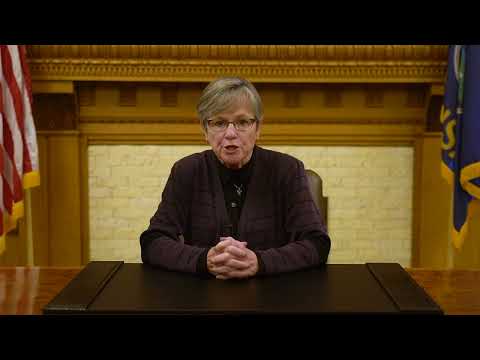
Gov. Laura Kelly outlines Kansas higher-education priorities at Midwestern Higher Education Compact meeting
Summary
Gov. Laura Kelly used the Compact meeting to highlight Kansas' higher-education network and outline priorities: expanding need-based aid, investing in student-success programs, boosting workforce training (including apprenticeships and micro-internships), and expanding education in correctional facilities and veteran transition supports.
Gov. Laura Kelly opened the Midwestern Higher Education Compact meeting in Kansas on Feb. 18, welcoming Compact members and outlining the state's higher-education priorities.
"Welcome to Kansas for your annual Midwestern Higher Education Compact meeting," Gov. Laura Kelly said, thanking attendees for their leadership and dedication to improving higher education across the region.
Kelly framed the remarks around the scale of the state's postsecondary system, saying Kansas is home to "6 Regent universities, Washburn University, 19 community colleges, 7 technical colleges, and 25 independent post secondary institutions," which together educate "more than 250,000 certificate or degree seeking students each year." She said those institutions are central to local communities and the state's economy.
To increase access, the governor said Kansas has "significantly expanded need based financial aid to break down barriers and create a pathway to higher learning for all." She added that financial aid alone is not enough and emphasized complementary investments in student-support programs. "That's why we're also deeply committed to investing in student success initiatives that provide comprehensive support so every student can thrive," Kelly said.
Workforce development was a second focal point. Kelly said the state is "doubling down on workforce development programs, focusing on high demand fields like nursing and technical careers." She described efforts to expand apprenticeships to connect learning with hands-on experience and to launch micro-internship programs that let students explore careers before graduating.
Kelly also highlighted Kansas' work on postsecondary education in correctional settings, saying the state "have emphasized education for incarcerated individuals for decades and have become a nationwide leader in providing higher education programs in prisons." She said private-industry partnerships and work by the Kansas Department of Corrections have turned facilities into training sites that offer marketable skills and support reentry into the workforce.
On veterans' education, Kelly cited the state's CANVET program as an example of a targeted transition resource. "My administration established the CANVET program to provide Kansas veterans and those going through a separation from the military with educational resources and opportunities for a seamless transition to civilian life," she said.
Kelly closed by noting Kansas' early involvement in the Compact and calling for continued collaboration. "As the first state to join the compact, we understand the importance of collaboration and leadership in strengthening our region's educational and economic future," she said, thanking participants and encouraging the exchange of ideas.
The remarks were delivered as opening remarks at the Compact meeting; no formal votes or motions were recorded in the transcript of the speech.