Get Full Government Meeting Transcripts, Videos, & Alerts Forever!
Get email alerts on the Prison Education topic
No spam. Unsubscribe anytime.
Panel spotlights postsecondary prison education as a path to safer facilities and jobs
Summary
Experts at a Midwestern Compact panel urged expanding college programs inside prisons, citing research that participants have a 48% lower chance of returning to prison, workforce demand for middle-skill jobs, and the need to combine federal, state and private funding to scale programs.
A panel convened by the Midwestern Compact on postsecondary education for incarcerated people highlighted research and program models that panelists said reduce recidivism, improve facility safety and connect returning residents to jobs.
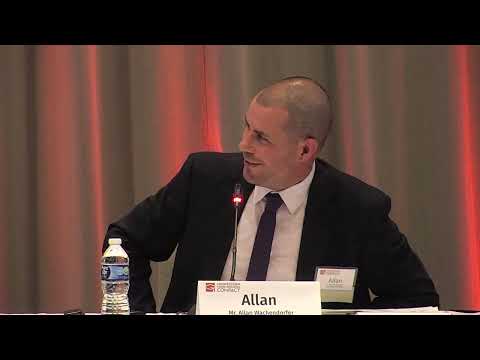
Alan Wakendorfer, program manager at the Vera Institute of Justice, said research shows "people who participate in post secondary education opportunities while they're in prison have a 48 percent lower odds of returning to prison than those who do not participate." He also cited cost-savings, saying each dollar invested in such programs yields roughly a $4 return from reduced incarceration costs.
Sean Addy, director of the Office of Correctional Education and of the Office of Career, Technical, and Adult Education at the U.S. Department of Education, described the department's role in technical assistance and grants. "Those are the classrooms, that's where the students are," Addy said, explaining why strong partnerships with state departments of correction are essential to run in-prison programs and to implement waivers and grants such as the Second Chance Pell pilot.
Greg Mosier, president of Kansas City Kansas Community College, urged using community colleges and short certificate programs to meet employer demand for middle-skill workers. Mosier pointed to a one-semester welding certificate at Lansing Correctional Facility and partnerships with companies such as Zephyr Products and Panasonic as pathways to local jobs.
Carrie Bosma, co-director of Hope College's Western Prison Education Program, described higher education inside prisons as "a transformative thing particularly for incarcerated students," noting classroom learning can foster problem-solving, social responsibility and safer interactions inside facilities.
Panelists outlined practical steps for states and institutions: build trust between corrections and colleges, designate classroom space in facility planning, and braid federal streams (WIOA, Perkins, Second Chance Act grants) with state and philanthropic funds. Addy warned federal programs alone are limited: some streams are described as ceilings rather than floors and must be combined with state investment to scale services.
The panel also discussed technical and policy caveats. Panelists said Pell eligibility and sequencing require careful planning because Pell has semester limits and people in jails often cycle in and out too quickly for semester-length programs. The Digital Equity Act and Integrated Education and Training models were highlighted as ways to upgrade technology access and accelerate attainment of high-school equivalency alongside occupational skills.
Audience members asked about literacy services, program design for new prisons, and managing sensitive research topics that corrections may restrict. On facility design, panelists recommended building dedicated education space from the outset. On academic freedom, Bosma recommended educators learn facility restrictions, develop trust with corrections partners and, where appropriate, negotiate access to academic materials while respecting safety concerns.
The session closed with moderators encouraging further, state-specific follow-up to help jurisdictions organize funding, partnerships and facility planning for expanded higher-education programming inside correctional institutions.