Get Full Government Meeting Transcripts, Videos, & Alerts Forever!
Get email alerts on the Wisconsin Dual Enrollment topic
No spam. Unsubscribe anytime.
Wisconsin technical colleges adopt playbook; Gateway Technical College reports a jump in dual-credit participation
Summary
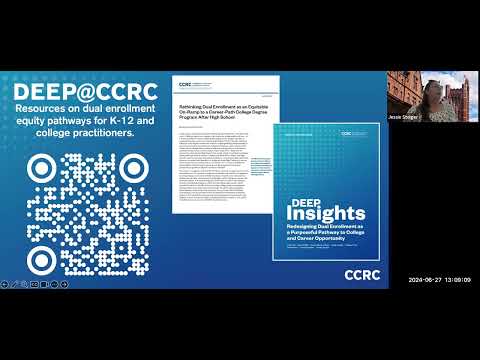
Wisconsin technical college leaders described using a CCRC playbook and self-assessment across 16 technical colleges, citing a system-level approach, a Tableau dashboard for tracking dual-credit data, and Gateway Technical College’s example of expanding a partner high school from 1–2 dual-credit classes to 10–12 courses.
Anne Westrick, education director for career prep and K–12 at the Wisconsin Technical College System, described a system strategy that emphasizes relationships, shared playbooks and non-policy mechanisms to expand equitable dual enrollment. "We have 16 colleges that I work with," she said, and the system uses recurring meetings and shared assessments to spread best practices.
Gateway Technical College representatives described how they used the CCRC playbook and system self-assessments to identify gaps, coach partner high schools and expand course offerings. Samantha Duzik (dual credit manager) and Katie Groff (director of high school partnerships) recounted one high school’s shift from offering "1 or 2 dual credit classes" to providing "10, 12 different courses" after local professional development, faculty alignment and coordinated coaching.
Panelists also described two statewide supports intended to smooth matriculation: Wisconsin’s Universal Credit Transfer Agreement (UCTA), initially mandated to include 30 transferable credits and now showing 72 credits on the list, and a system Tableau dashboard that aggregates prevalence, outcomes, transitions and credential awards to help coordinators track participation and student transitions.
Why it matters: Local adoption of shared tools, regular practitioner convenings, and data systems can convert report recommendations into measurable increases in access and credentialing, according to the panelists’ account.
Next steps: Panelists encouraged practitioners to use published playbooks, the strategy development guide and system dashboards; webinar slides and resources will be available on the MHEC website.