Lifetime Citizen Portal Access — AI Briefings, Alerts & Unlimited Follows
CCRC report outlines state tools to expand equitable dual enrollment
Loading...
Summary
A new Community College Research Center report presented at an MHEC webinar recommends six state and system mechanisms — legislative, funding, regulation, resources, engagement and guidance — aimed at expanding access and making dual enrollment a reliable on-ramp to high-opportunity postsecondary pathways.
Jesse Steiger, senior research assistant and applied research fellow at the Community College Research Center, outlined national trends and policy recommendations during a Midwestern Higher Education Compact webinar. He said there were "an estimated 1,500,000 dual enrollment students, enrolled as of fall 2021," and noted continued double-digit growth reported by the National Student Clearinghouse.
The report, How States and Systems Can Support Practitioner Efforts to Strengthen Dual Enrollment, frames three practice areas — expand access; strengthen dual enrollment as an on-ramp to high-opportunity postsecondary pathways; and build and sustain cross-sector partnerships — and identifies six mechanisms states and systems can use to advance those goals. Steiger described the six as three policy levers (legislation, funding, regulation) and three non-policy levers (resources, engagement, guidance).
Why it matters: Dual enrollment is widespread — Steiger said about 90% of high schools offer some form of it — but access is uneven. He pointed to long-standing equity gaps affecting American Indian, Black, Hispanic, Native Hawaiian/Pacific Islander students, students with disabilities and English-language learners, and urged states to study districts that have closed those gaps through deliberate practice.
Steiger highlighted state examples included in the report: Kentucky’s Council on Postsecondary Education set a dual credit attainment goal to increase the share of students completing at least one dual credit course; Ohio legislated statewide pathways (College Credit Plus) and created transfer tools such as OT 36 and the Ohio Guaranteed Transfer Pathways to protect transferability of credits.
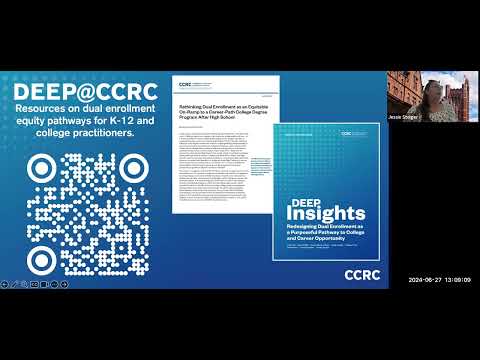
Panelists from Minnesota and Wisconsin described how systems used the playbook and a strategy development guide to turn recommendations into practice. The webinar concluded with practical resources — the report and a separate state policymaker strategy development guide — that Steiger said are available through MHEC and the CCRC.