Get Full Government Meeting Transcripts, Videos, & Alerts Forever!
Get email alerts on the Public Finance topic
No spam. Unsubscribe anytime.
Municipal advisors present debt scenarios for proposed government center remodel; board told metrics remain strong
Summary
K&N Public Finance presented updated financing scenarios for a proposed government center remodel, showing multiple bond‑term options and that Kings County’s rating‑agency metrics would remain strong under modeled scenarios; staff will return in March with a resolution if the board wishes to proceed.
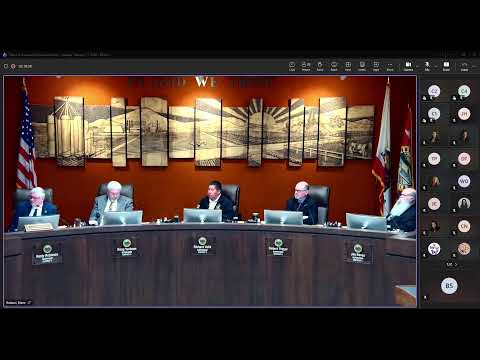
Matthew Boyette introduced K&N Public Finance municipal advisors, who provided an updated study session on debt issuance on Feb. 17 for a proposed large capital project to remodel county court buildings and a government center.
David Leifer of K&N summarized existing county lease obligations and presented three bond scenarios across two county cash contribution assumptions and 20/25/30 year terms. Leifer said interest rates have fallen since the prior presentation and that the advisors modeled capitalized interest during construction (which delays the onset of debt service). He described Standard & Poor's rating‑agency buckets (economy, financial performance, reserves/liquidity, management practices, and debt/liabilities) and showed pro forma scores indicating the county would likely remain in strong scoring categories for the key debt ratios under the illustrated scenarios.
Leifer emphasized tradeoffs: a shorter bond term lowers total interest cost but raises annual debt service and using county cash upfront reduces final par amount and long‑term cost. He noted pension liabilities and reserves are material scoring factors and urged caution to avoid drawing reserves down to balance budgets. Staff said they plan to return in March with an item to finalize available cash contributions and, if directed, a resolution authorizing issuance steps.
Supervisors asked about call dates, whether assets must be free and clear if pledged, and the practical timing of issuing bonds. Leifer said assets used as collateral generally need to be free and clear and that financing preparation typically takes four to six months. The board did not take action at the study session; staff indicated next steps would include a March board item to finalize financing terms and authorizations.