Get Full Government Meeting Transcripts, Videos, & Alerts Forever!
Get email alerts on the School Safety topic
No spam. Unsubscribe anytime.
Committee backs bill requiring school cardiac-response plans and funding for AEDs and training
Summary
House Bill 115 would require school cardiac-event response plans and provide limited funding for training and AEDs; sponsors and witnesses said AED access and training increase survival, while members questioned whether the fiscal note covers procurement and long-term maintenance.
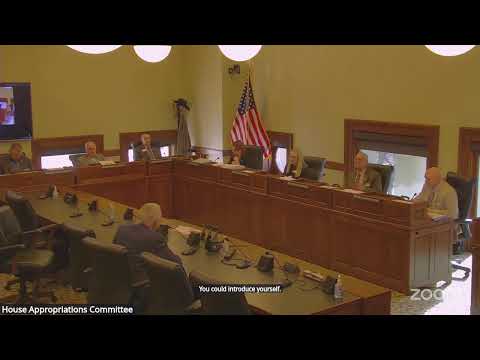
The House Appropriations Committee voted Feb. 17 to advance House Bill 115, which requires school districts and charter schools to develop cardiac-event response plans and provides funding to acquire and maintain AEDs and related training.
Representative Byron, the sponsor, said the bill—requested by charter schools—would expand planning and funding statewide and that he will introduce an amendment to explicitly include charter schools. "This asks school districts and charter schools to come up with a cardiac event response plan in their schools, and, also, it provides funding... as well as AEDs in schools," Byron said.
Committee members questioned the fiscal note. Representative Harrelson noted a biennial fiscal note of $50,000 (split $25,000 per year) plus $4,500 in personnel and benefits for a total near $59,000 and asked whether that will cover AED procurement and training. Byron said some districts already have multiple AEDs and that manufacturers and partners may provide discounted or donated devices; he said the appropriation can be adjusted in future sessions as needed.
Richard Garrett of the American Heart Association testified in support, offering technical help and noting improved detection and the life-saving difference made by AEDs and training: "We are also able to help, bring, to the table manufacturers... secure AEDs at a much lower cost, sometimes even a donated AED," he said.
Chairman Bair asked whether there is evidence of correlation between COVID vaccination and increased cardiac incidents in young people; Garrett offered to research and follow up.
After discussion and public testimony, the committee voted to move the bill do pass. The bill will proceed with sponsor amendments and follow-up on program implementation details.