
Committee hears initial testimony on 'Human Heartbeat Act'; public comment split and hearing carried over
Get AI-powered insights, summaries, and transcripts
Subscribe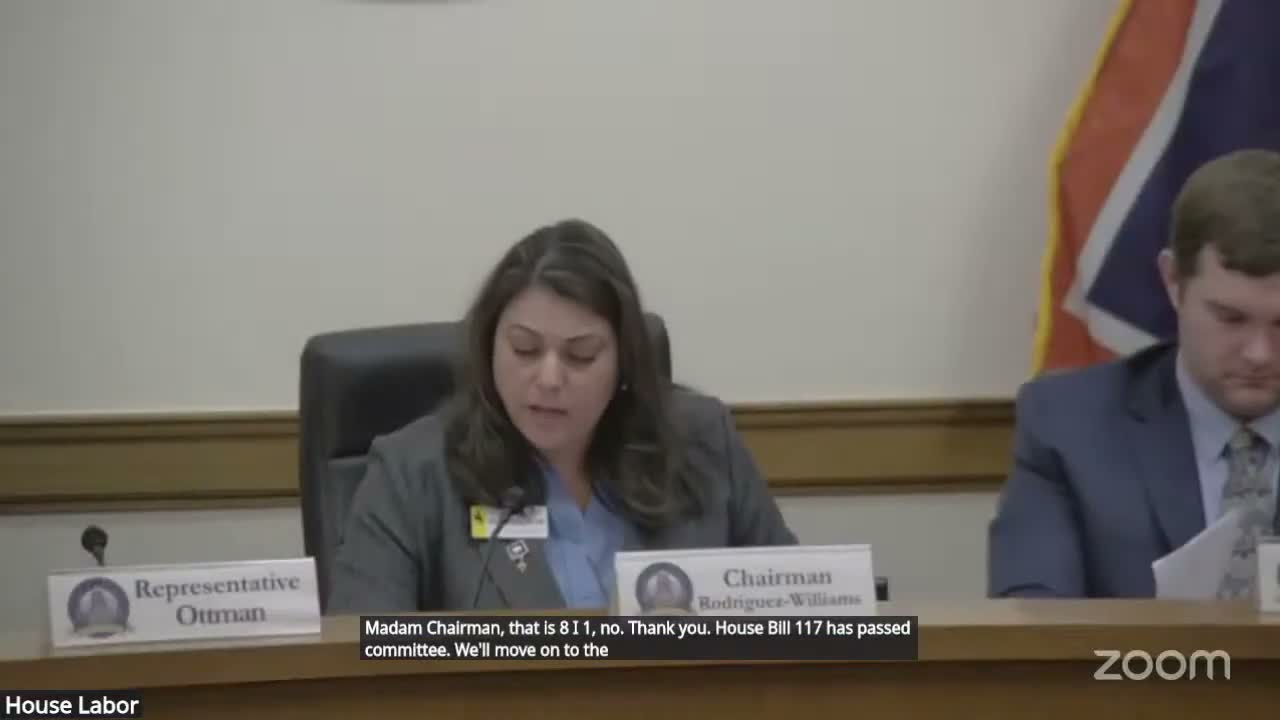
Summary
House Bill 126, the 'Human Heartbeat Act,' was introduced and received initial sponsor remarks and public testimony both for and against; the committee did not finish public comment and carried the bill over for further consideration.
Speaker Nyman introduced House Bill 126, the "Human Heartbeat Act," asking the Labor, Health & Social Services Committee for favorable consideration and describing the bill as establishing legal protection for an unborn child when a fetal heartbeat is detectable. The sponsor framed the measure as drawing a policy line the state may adopt under the Wyoming Constitution and said the bill would protect unborn life once a heartbeat is detected through "standard medical procedures."
Committee members asked technical questions about detection methods: Representative Clauston noted a transvaginal ultrasound can detect cardiac activity earlier (about 6–7 weeks) while a Doppler commonly detects cardiac activity later (about 10–12 weeks); the sponsor replied the bill relies on standard medical procedures and does not set a gestational‑age trigger.
Public testimony was divided. Supporters — including representatives of the Catholic Diocese, Laramie County Right to Life and other pro‑life advocates — argued a detectable heartbeat indicates a living human organism deserving legal protection. Several cited moral and religious rationales and urged committee support.
Opponents — including reproductive‑rights advocates and private citizens — argued the bill is likely unconstitutional given the Wyoming Supreme Court’s recent interpretation of the health‑care freedom amendment (which the court found protects abortion as health care under the state constitution in State v. Johnson), expressed public‑health concerns and warned felony penalties and mandatory license revocations in the bill could have harmful consequences. Witnesses noted the American College of Obstetricians and Gynecologists states fetal pain is not likely before 24–25 weeks and said many fetal anomalies are discovered at the 20‑week anatomy scan, which the bill may not accommodate.
The committee paused testimony before hearing all online witnesses and announced it would reconvene after adjournment to finish public comment and potentially work the bill. No committee vote occurred on HB126 at this meeting.
Committee members and witnesses framed the bill’s central legal question as whether the state may adopt the sponsor’s proposed restriction consistent with the Wyoming Constitution; testimony focused on detection methods, the bill’s exceptions and likely legal challenges.