Get AI Briefings, Transcripts & Alerts on Local & National Government Meetings — Forever.
Wyoming committee advances bill creating private civil remedy for alleged coerced abortions, 8–1
Summary
The Labor, Health & Social Services Committee passed House Bill 117, creating a private cause of action for women who say they lacked adequate informed consent or were coerced into elective abortion; the committee approved the bill 8–1 after several amendments and debates over studies, standards, and a 24‑hour waiting period.
The Labor, Health & Social Services Committee voted 8–1 to advance House Bill 117 after a day of presentations, public testimony and amendments. The bill, sponsored by Representative Lolly, would create a private civil cause of action for an "interested party" alleging harm from an elective abortion when informed consent was inadequate or the pregnant woman was coerced.
Representative Lolly told the committee HB117 "empowers a woman, not the state, to enforce her own right to be fully informed and free from coercion," and outlined statutory definitions, a baseline $25,000 statutory damage award per claim and a five‑year statute of limitations. Sponsor testimony noted an effective date of July 1, 2026.
Brad Kerr of Americans United for Life told the committee the bill is consistent with existing informed‑consent jurisprudence, citing Planned Parenthood v. Casey and later decisions as examples the sponsor and his allies said support the bill’s constitutionality. Kerr said the bill uses an objective, reasonable‑person standard to assess coercion.
Opponents and medical witnesses told the committee the bill departs from traditional malpractice frameworks. "This bill creates an abortion‑specific civil‑liability structure," said Wendy Volk, a private citizen from Cheyenne, who warned the statutory damages, mandatory attorney fees for plaintiffs and restricted defenses could be viewed as a punitive framework by courts. Linda Burton of Wyoming Right to Choose and Katie Kaneter of Wellspring Health Access, which operates Wyoming’s only procedural and medication abortion facility, said informed consent already exists in medical practice and warned the bill’s 24‑hour waiting period would create an additional barrier to care.
Several witnesses described personal and clinical perspectives: Dr. David Lind, a retired obstetrician‑gynecologist, urged robust informed consent standards that account for procedure type and gestational age; Maria Ward of Project Rachel and other witnesses recounted long‑term emotional distress they say can follow abortions obtained under duress.
Committee members debated the evidentiary basis for findings in the bill and several amendments. Representative Dean moved to strike two studies cited in the bill’s findings; that amendment failed. Representative Yen proposed removing the phrase "or should have known" from the coercion element, citing concerns about how negligence would be proved; that amendment also failed after debate. Representative Clauston successfully amended language to change the bill’s reference from a "study" to a "review." The committee also debated (and took a recorded vote on) an amendment to remove the bill’s mandatory 24‑hour waiting period; sponsor Representative Lolly defended the window as time for patients to digest information and said emergency exceptions are preserved.
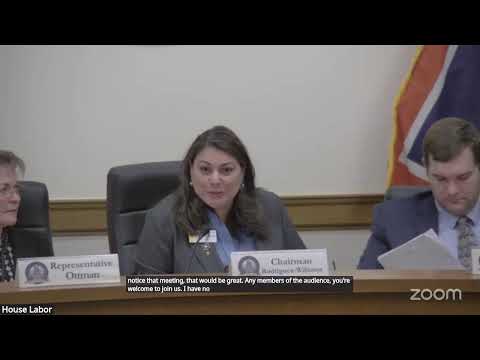
The clerk called the roll on final passage in committee. The record shows several members voting aye and one member, Representative Yen, voting no; the clerk announced the tally as 8 Aye, 1 No. The committee chairwoman, Rodriguez Williams, announced House Bill 117 had passed committee and would move on for further consideration in the legislative process.
The committee’s action creates a new civil enforcement pathway distinct from malpractice claims; whether the statute will survive litigation was a central theme in testimony and questioning. The committee also left in place a mix of statutory remedies, standards and procedural requirements that supporters say protect patients and opponents say risk chilling medical practice.
House Bill 117 now advances from committee. The committee record shows the bill was moved by Representative Guggenmoss and seconded by Representative Wasserburger; the committee adopted a number of technical amendments during consideration.