Get Full Government Meeting Transcripts, Videos, & Alerts Forever!
Get email alerts on the Rezoning topic
No spam. Unsubscribe anytime.
Board denies rezoning request for Horseshoe Trail property, cites restrictive covenants and spot-zoning concerns
Summary
The Board of Supervisors denied a request by Terrance and Deanna Stilner to rezone about 8 acres at 18345 Horseshoe Trail from R2 to A2, with staff and the planning commission pointing to restrictive covenants and spot-zoning risk.
Washington County supervisors denied a rezoning request from Terrance and Deanna Stilner to change roughly 8 acres at 18345 Horseshoe Trail from R2 (Residential) to A2 (Agricultural).
Planner Steve Richardson told the board the property is within a platted subdivision and that restrictive covenants recorded in the chain of title state "all tracts shall be used for residential purposes," which influenced staff's recommendation against rezoning. Richardson said the planning commission unanimously recommended denial.
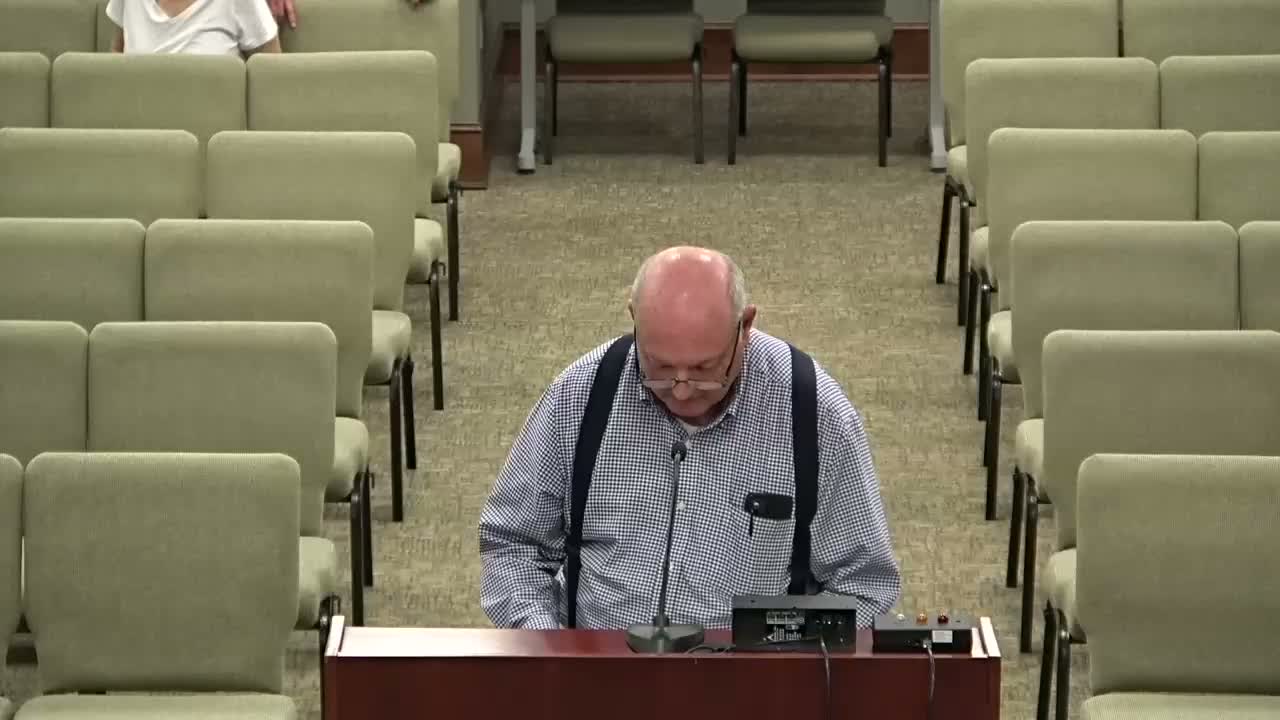
Applicants told the board they seek flexibility for light agricultural uses, such as keeping a few horses or cattle. "The reason that we're wanting to rezone it is... to put horses or a few cattle on it," Terrence Stilner said during the hearing.
Board members and legal staff discussed the risk of creating "spot zoning" if the county were to rezone a small parcel surrounded by R2 zoning. County counsel and staff cited the Virginia Supreme Court standard and warned the board that rezoning a single parcel in the middle of an established residential subdivision risks legal challenge.
Supervisor (speaker 3) moved to deny the request citing spot-zoning concerns and the existence of restrictive covenants; the motion was seconded and the board voted to deny the rezoning.
What happens next: staff advised applicants that a lawful path forward could include seeking contiguous rezoning with adjacent property owners or otherwise addressing the restrictive covenants; the board suggested applicants consult counsel and the planning staff before pursuing a revised petition.