Get Full Government Meeting Transcripts, Videos, & Alerts Forever!
Get email alerts on the Stormwater topic
No spam. Unsubscribe anytime.
Washington County adopts combined stormwater and erosion ordinance
Summary
The Board of Supervisors adopted a recodified Chapter 30 that combines erosion and sediment control with stormwater management, adds an ‘agreement in lieu of plan’ for small farm parcels, an alternate inspection program and surety bond provisions in Appendix A; vote was 7-0.
The Washington County Board of Supervisors voted unanimously to adopt a recodified Chapter 30 that combines local erosion and sediment-control rules with stormwater management and establishes updated fees and procedures.
County attorney/staff advisor Mr. Snodgrass, who led the presentation, said the model ordinance was prepared with the Virginia Department of Environmental Quality (DEQ) and Richmond officials and consolidates prior separate guidance on erosion, sediment control and water-quantity/quality into a single, online, regularly updated ordinance. "What you have gentlemen is a state ordinance that DEQ and the folks in Richmond have spent a lot of time drafting," he said.
The ordinance includes three principal changes: (1) an "agreement in lieu of plan" allowing farmers on a single tax parcel to avoid extensive engineering plans when moving small amounts of material (Snodgrass said the threshold is movement of less than 5 percent of an acre for that parcel); (2) an alternate inspection program permitting the stormwater administrator to use a tailored inspection schedule instead of the prior blanket 48-hour inspection requirement after heavy rain; and (3) Appendix A provisions establishing surety bond levels tied to project size to ensure reclamation if a developer fails to complete required work.
Board members asked whether surety bonds would be administered by the county. Snodgrass and staff clarified the typical arrangement: the landowner/applicant secures the bond and county finance holds it until release upon project completion. The change to inspection timing was described as a pragmatic tweak to reduce a burden that would otherwise require inspecting some 130 sites within 48 hours.
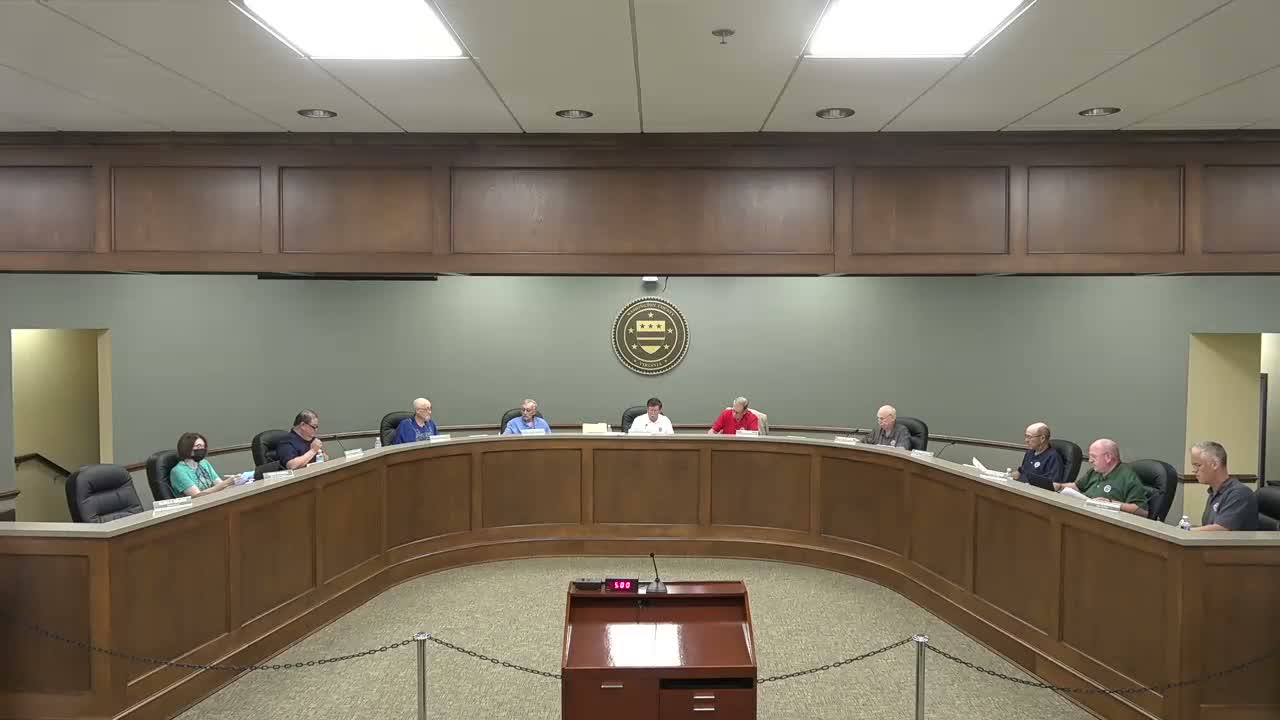
A motion to approve the ordinance was moved and seconded; the Board approved the measure by voice vote, 7-0. There were no members of the public who spoke in favor or opposition during the public hearing.
The ordinance will replace the separate chapters and appendices previously governing erosion, sediment control and stormwater and puts the consolidated requirements and fee schedule into Chapter 30 and Appendix A. The county described the change as aligning local rules with DEQ model language while preserving the county's ability under Dillon-rule authority to set stricter local standards where appropriate.
The Board took the action after staff’s presentation and a brief question-and-answer period; implementation steps and any future amendments will be handled through the county’s normal ordinance-update process.