
House adopts amendment, passes H.898 on telecom transitions and consumer access
Get AI-powered insights, summaries, and transcripts
Sign Up Free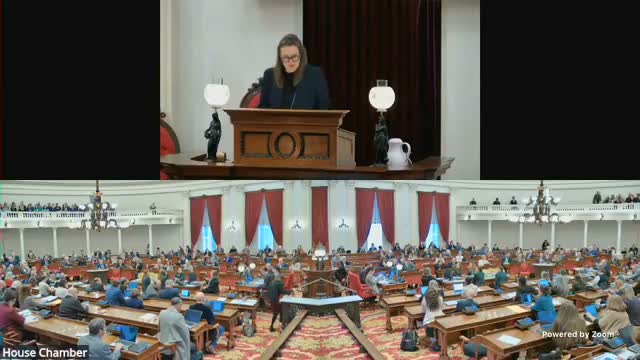
Summary
The Vermont House adopted an amendment requiring consumers be able to obtain a mailed hard copy of Public Utility Commission Rule 7.6 and then passed H.898, a bill addressing copper-to-fiber network transitions and consumer protections.
The Vermont House on Feb. 17 adopted an amendment to House Bill H.898 and then passed the bill, which addresses transitions from copper-based to fiber-based telecommunications networks and includes consumer protection provisions.
The amendment, offered by the member from Northfield, added language to ensure consumers are provided information about how to obtain a written copy of Public Utility Commission Rule 7.6 — which sets standards for billing, credit and collections, and customer information — and explicitly included a U.S. mail option for receiving a printed copy. "My proposed addition simply adds that there should be information to those consumers about how they can access a written copy to be mailed to them as an alternative," the member from Northfield said on the floor.
The House Energy and Digital Infrastructure Committee had heard the amendment and reported it supported by a straw poll vote of 8–0–1, the member from Dover told the chamber. Members then voted to adopt the amendment by vocal assent.
On the floor, the member from Coventry urged caution, asking whether legacy telephone companies would remain the provider of last resort and warning that removing that obligation could put rural customers at risk of losing telephone service. "We need to be cognizant of that and make sure that we're protecting all of our Vermont citizens, even in the rural areas," the member from Coventry said.
After brief floor discussion, the House voted and the presiding officer announced that the ayes had it; H.898 was passed. The clerk scheduled the standard committee referrals and next steps consistent with legislative procedure.
The amendment and vote as recorded on the floor were by vocal assent; no roll-call tally was recorded in the floor transcript.