Get Full Government Meeting Transcripts, Videos, & Alerts Forever!
Get email alerts on the Emergency Management topic
No spam. Unsubscribe anytime.
Warren County updates Emergency Operations Plan, deputy coordinator announces retirement
Summary
Lieutenant Brian Foley briefed the board on a 230‑page Emergency Operations Plan updated to align with the Code of the Commonwealth of Virginia, FEMA and VDEM guidance; the plan clarifies roles and reporting, modifies legal‑support expectations, broadens evacuation transportation planning and adds a family evacuee checklist.
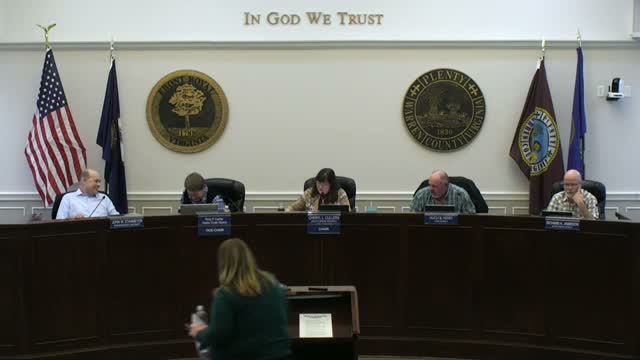
Lieutenant Brian Foley, Warren County’s deputy emergency coordinator and cost‑recovery manager for Fire & Rescue, told the Board of Supervisors on Jan. 13 that the county has substantially revised its Emergency Operations Plan (EOP) and will present it for formal approval at the next regular board meeting.
Foley said the update — performed as required every four years under the Code of the Commonwealth of Virginia — aligns county practice with FEMA and Virginia Department of Emergency Management guidance and incorporates current staffing and resources. "This document is 230 pages," Foley said, and he offered to meet with supervisors privately to walk through details before formal approval.
Key changes he cited include clarified organizational responsibilities, updated personnel lists and a modernized emergency operations center structure to improve coordination and operational efficiency. Notably, Foley said the plan removes the requirement for the county attorney to be physically present in the EOC at all times; legal support will instead be available remotely or in person as needed to reflect current operational practice.
Foley said exercises and training expectations were updated, the plan standardizes situation reports to VDEM, and it integrates all 17 emergency support functions. He described broadened evacuation and emergency transportation language that clarifies interagency responsibilities and adds an evacuee preparedness checklist for families, seniors, people with medical needs and pet owners (medications, diapers and pet supplies).
On communications, Foley described expanded public information tools including Wireless Emergency Alerts (WEA) and other multi‑platform messaging used during recent local incidents. He said county dispatch can geofence alerts to Warren County and push immediate messages to cell phones in defined areas.
Supervisors asked about outreach channels (radio, cable access, WEA) and whether the county will publish a printable evacuation checklist; Foley said staff will work to add the checklist to the county website and that they recently coordinated regional tabletop exercises with VDEM for elected and senior officials.
Foley also announced he will retire at the end of January and introduced Lieutenant Lisa Wilbanks as the colleague who will assume the deputy emergency coordinator and cost‑recovery manager responsibilities going forward.