Boynton Beach OKs vinyl fence, hedge in place of required concrete wall for Estancia development after contentious hearing
Loading...
Summary
The City Commission approved a variance allowing Estancia at Boynton Beach to install a 6‑foot vinyl fence with an interior hedgerow instead of a required 6‑foot concrete wall; the variance passed 4–1 and a companion site‑plan modification was approved unanimously with landscaping conditions.
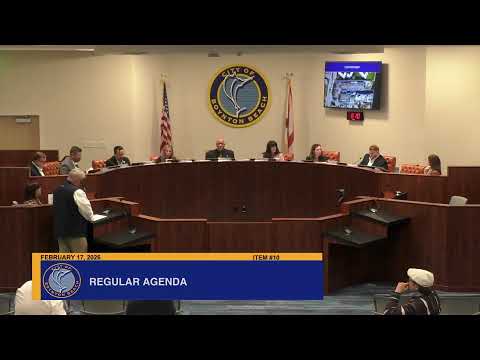
The Boynton Beach City Commission voted to allow a vinyl fence and hedgerow in place of a required concrete wall along the southeast corner of Estancia at Boynton Beach, a multifamily development at 3200 Estancia Lane, after a contested quasi‑judicial hearing on Feb. 17.
Attorney Tom Carney, representing Estancia, told the commission the project’s history stretches back two decades and that changes in property ownership and a recorded sewer easement altered earlier conditions. “The purpose of this meeting is to really try to correct a situation that's now 20 years old,” Carney said, arguing homeowners who purchased units after certificates of occupancy were issued should not bear a sudden $100,000 wall bill.
Neighbors and the owner of the adjacent single‑family lot objected. Michael Wisniewski, representing the owner of 815 Bamboo Lane, submitted an objection letter and told the commission a variance “cannot be used to correct construction performed contrary to a site plan,” arguing the missing wall and grading failures had caused ongoing drainage and erosion problems. Several residents said the concrete wall would be costly, would not fix underlying grading issues, and that the failure to build the wall earlier was the developer’s responsibility.
City staff recommended denial of the variance but offered conditions the commission could attach if it chose to approve. Amanda Radigan, development director, said the code requires a six‑foot solid barrier and a landscaped buffer: “The buffer includes a 6‑foot solid wall ... maintained landscaping and then a wall and then additional landscaping on the inside.” Staff and utilities confirmed a wall could be set off the property line by a 2–3 foot setback if constructed.
Commissioners weighed legal standards for variances—special conditions, avoidance of self‑created hardship, and minimum relief necessary—against testimony and a submitted affidavit from the original developer and neighbor recollections. Commissioner Turkin moved to approve the variance with staff’s recommended conditions, including the hedge row and placement off the property line; that motion passed on a 4–1 roll call vote with Commissioner Kelly dissenting. The companion major site‑plan modification was then approved unanimously with the same conditions.
The commission’s action directs staff and the applicant to finalize the detailed planting and construction plans under the conditions of approval. Because this was a quasi‑judicial matter, the record will include testimony and documents presented at the hearing; any party may seek judicial review consistent with Florida law.
The commission did not require immediate physical work; the approvals are subject to the conditions and permit process before any construction begins.