Lifetime Citizen Portal Access — AI Briefings, Alerts & Unlimited Follows
Fairfax County volunteer training stresses boundaries, confidentiality and when to involve Adult Protective Services
Loading...
Summary
Fairfax County Department of Family Services trained Volunteer Solutions volunteers on professional boundaries, confidentiality, limits on hands-on care, reporting concerns to coordinators, and signs that merit a call to Adult Protective Services. Staff used case studies including financial scams and missed medications to illustrate risks.
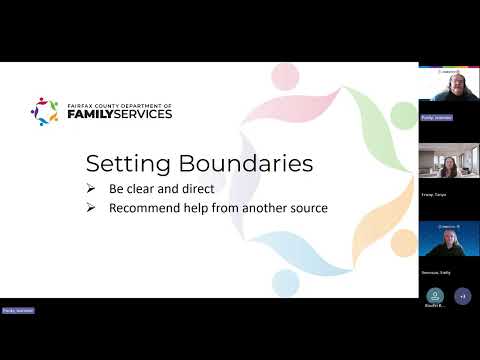
Fairfax County Department of Family Services staff led a February Connection Corner session for Volunteer Solutions volunteers focused on maintaining professional boundaries, volunteer safety and confidentiality.
The presenter told volunteers the session would cover both the specific responsibilities of volunteer roles and the parameters in which volunteers should operate. "We usually start our meetings, by sharing the values...being people focused, considering equity, holding folks accountable, looking for partnerships, and trying to be innovative," the presenter said, outlining group norms for training and service.
Staff emphasized that volunteers should not provide hands-on care such as lifting or transferring clients and that assistance with assistive devices is limited: volunteers may help carry or load devices weighing up to 20 pounds. Volunteers were reminded to follow the Volunteer Solutions handbook and county risk-management guidelines, wear badges that identify their training, and refer media inquiries to county public information officers rather than speaking to the press.
The session included three case studies to clarify when to escalate concerns. In a grocery-shopping scenario, staff urged volunteers to refer requests beyond assigned tasks back to the client’s caseworker and suggested community referrals such as Money Management programs. In a phone-visit example, volunteers were instructed to report if a client says they cannot afford medication; staff said this could warrant contacting Adult Protective Services rather than waiting for a worker to follow up. "This may be a case to call Adult Protective Services," the presenter said.
Staff and volunteers also discussed financial-exploitation risks after one example in which a client asked a volunteer to send money through Western Union; staff and participants agreed that volunteers should not complete such transfers and should instead alert coordinators and caseworkers. The presenter noted a local scam-tracking effort and said volunteers should report possible exploitation promptly.
Volunteers shared personal experiences underscoring the emotional strains of long-term matches. Chuck, a volunteer, described being dropped by a client after refusing to lend money and said he had to process the loss of the relationship. Staff said such attachments are common and advised volunteers to set consistent boundaries and seek support from coordinators.
The session closed with reminders that ElderLink Respite Care is a limited exception that requires special training, that Adult Protective Services mandatory-reporter training is available online, and with announcements about upcoming caregiver-support virtual sessions on Feb. 18 (hospice care) and March 18 (investment fraud) and a volunteer recognition week the week of April 20.
Staff asked volunteers to report concerns to their regional volunteer coordinators (named in the session as Christy, Jody and the presenter) and to use the intake specialist, Carol, as the referral point for screening new clients. The presenter encouraged volunteers to contact coordinators when they encounter unclear or risky requests and said coordinators will follow up with caseworkers as appropriate.