Get Full Government Meeting Transcripts, Videos, & Alerts Forever!
Get email alerts on the Housing Repair topic
No spam. Unsubscribe anytime.
Louisa County approves $50,000 for essential home repairs to keep seniors in place
Summary
The Board of Supervisors unanimously approved a $50,000 allocation to the Fluvanna-Louisa Housing Foundation to support its essential home repair program after hearing that state and private grant funding has declined, leaving local households at higher risk of displacement.
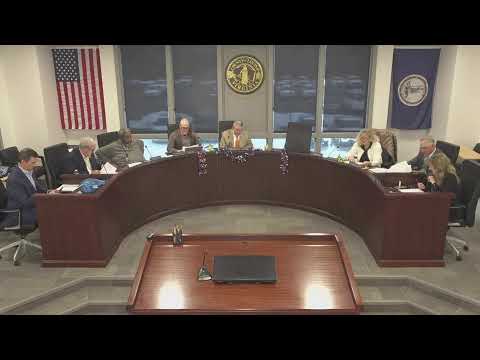
Louisa County's Board of Supervisors voted unanimously Tuesday to provide $50,000 to the Fluvanna-Louisa Housing Foundation to support its essential home repair program, which the foundation says helps keep long-time, low-income homeowners—many of them seniors—in safe, habitable homes.
Kim Hyland, who identified herself as representing the Fluvanna-Louisa Housing Foundation, told the board the program has seen steadily increasing demand while several traditional funding sources have shrunk. Hyland said HPG (Housing Preservation Grant) and private grants have fallen "from about $212,000" in an earlier fiscal year to roughly "$60,000 this year" shared among counties, and she described the program as serving "about 50 people a year" in Louisa County with an "average age [of] about 68." "It's about keeping our seniors in place," she said.
Hyland described the foundation's usual model as a mix of grants and loans for repairs, and gave an example: on a $6,000 roof they might grant $3,000 and loan $3,000 to reduce out-of-pocket cost for older homeowners. She also said the foundation had recently received a $10,000 Amazon/Rappahannock Community grant specifically for repairs.
During discussion, supervisors emphasized the program's role in preventing homelessness and stabilizing neighborhoods. A supervisor recounted a case of a single parent who was forced to relocate to Waynesboro after housing became unworkable, using the example to press for more local support.
A motion to approve the foundation's $50,000 request was placed on the floor, and the board voted in favor by voice vote. The motion passed unanimously.
The funding is intended to be disbursed consistent with the foundation's existing criteria, which Hyland said typically prioritize households below 50% of area median income and apply a formula that sets grants and loan caps depending on repair size. Hyland told the board the foundation will continue to seek LCCF and BAMA grants and encouraged local officials to press for greater state support for programs that serve rural homeowners.
The board also discussed sending a letter of support for a separate, shovel-ready affordable-housing project to be included in community project funding requests.