
Assembly updates public‑records law after debate over ACDA carve‑out and proprietary software
Get AI-powered insights, summaries, and transcripts
Subscribe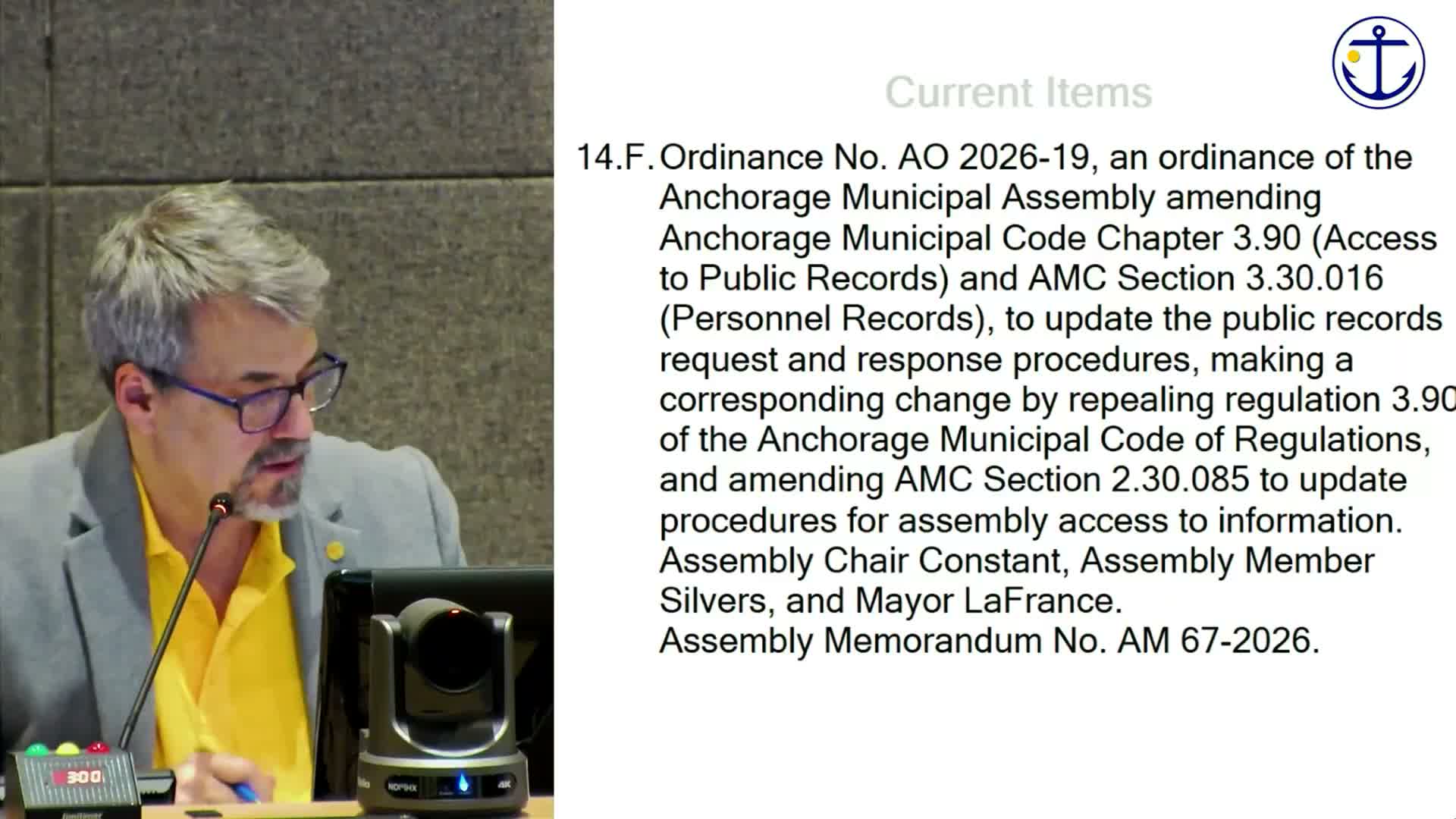
Summary
The Assembly on Feb. 17 passed a substantial update to the municipal public‑records ordinance with amendments addressing terminology and fees; debate focused on whether entities such as the Anchorage Community Development Authority are covered and how proprietary software and data reports are handled.
The Anchorage Assembly adopted AO 2026‑19 on Feb. 17, a major revision to the municipality’s public records ordinance that sponsors said narrows exemptions, sets timelines for responses and reduces barriers for requesters. The project had been under development for more than two years and drew public testimony and technical questions about limits and exemptions.
Public commenters and community advocates voiced concerns that certain definitions and carve‑outs could weaken transparency. Miranda Wolso urged clarity on whether municipal instrumentalities such as the Anchorage Community Development Authority (ACDA) would be covered and argued that a blanket proprietary‑software exemption could exclude data the public needs. Administration staff and sponsors said the ordinance exempts source code for proprietary software but requires disclosure of reports and exports generated from those systems; sponsors also said the change codifies regular production schedules and streamlined appeals.
Two floor amendments were adopted in committee: one to update language from "substance abuse" to "substance misuse" for consistency with prior policy, and another to lower a nominal filing fee from $10 to $6 to match current APD practice and minimize barriers. Assembly members also discussed ACDA’s separate statutory treatment under municipal code; administration counsel said ACDA is currently exempt by code unless otherwise provided and recommended a separate project if the body wishes to change that status.
The ordinance passed on a near‑party line vote reported as 11–1, with one member opposing. Sponsors said the ordinance is a compromise product intended to improve access while protecting legitimately confidential technical elements of municipal systems. The new rules include timelines for production, reduced fees for small requests and provisions to preserve personnel and other protected records while clarifying appeals.