Get Full Government Meeting Transcripts, Videos, & Alerts Forever!
Get email alerts on the Employee Health Benefits topic
No spam. Unsubscribe anytime.
Jonesboro hears presentation on city’s self-funded employee health plan; consultants cite drug-rebate and prescribing savings
Summary
City consultants told the Jonesboro City Council the shift from fully insured coverage to a self-funded model produced immediate benefits: about $671,000 in captured drug rebates and an estimated $1.6 million saved by resourcing 36 high-cost prescriptions, while also allowing more detailed claims management and wellness programming.
Jonesboro city officials on Feb. 17 heard a multi-part presentation on the city’s employee health plan and benefits strategy, including how a move to a self-funded plan affected costs and services.
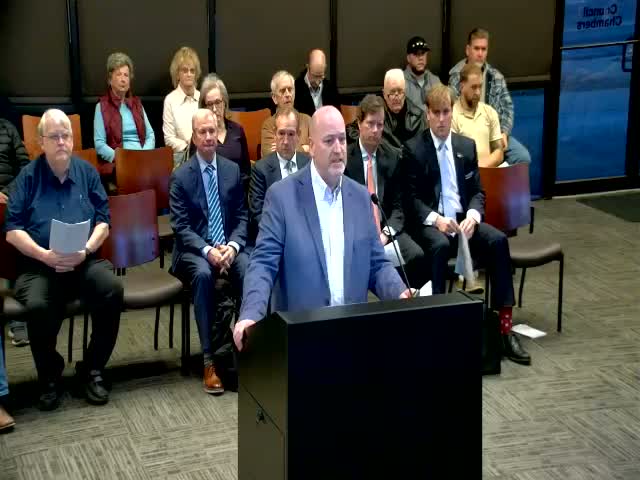
Mayor (unnamed) opened the special-presentations segment and invited staff to explain the changes the council approved. Greg Hatcher of the Hatcher group described structural drivers of rising health-care costs and why the city shifted from a fully insured contract to a self-funded arrangement. Hatcher said self-funding gives the city direct access to claims data, reduces premium-tax exposure and allows the city to retain a portion of drug rebates previously captured by carriers.
Hatcher cited two concrete figures: the city recovered roughly $671,000 in drug rebates after moving to self-funding, and targeted “script sourcing” for about 36 high-cost prescriptions produced an estimated $1,600,000 in savings. “Those 36 prescriptions, we saved $1,600,000,” Hatcher said in the presentation.
Jacob Still, a health-care consultant with the Hatcher Agency, described on-site wellness clinics conducted with Arkansas State and NYIT that increased preventive visits and outlined a cancer-support program, noting the plan has seen over 80 cancer-treatment claims since 2023. Still also described a specialty-medication program that helps lower-income employees access manufacturer pricing or mail-order options to reduce out-of-pocket costs.
Don Wiener of ADP explained the city’s HR-system upgrade, saying the technology consolidation was intended to reduce manual processes for a three-person HR team and provide better self-service tools for employees. Scott Allison described the BenefitsMe payroll-deduction purchasing program launched about five months ago; Allison said roughly 27% of employees have signed up to view the program.
The consultants and staff emphasized that self-funding does not “fix” health care but provides the city more control over benefit design, claims management and targeted drug strategies that can blunt trend. Council members and an employee who spoke during the meeting praised the wellness programs and the reported cost-management steps.
What’s next: staff indicated continued monitoring of claims, possible future PBM (pharmacy benefit manager) evaluation, and an expansion of virtual primary-care and behavioral-health options in future plan years.