
Scott County board approves comments to Met Council on regional solicitation, flags 'community considerations' weighting
Get AI-powered insights, summaries, and transcripts
Subscribe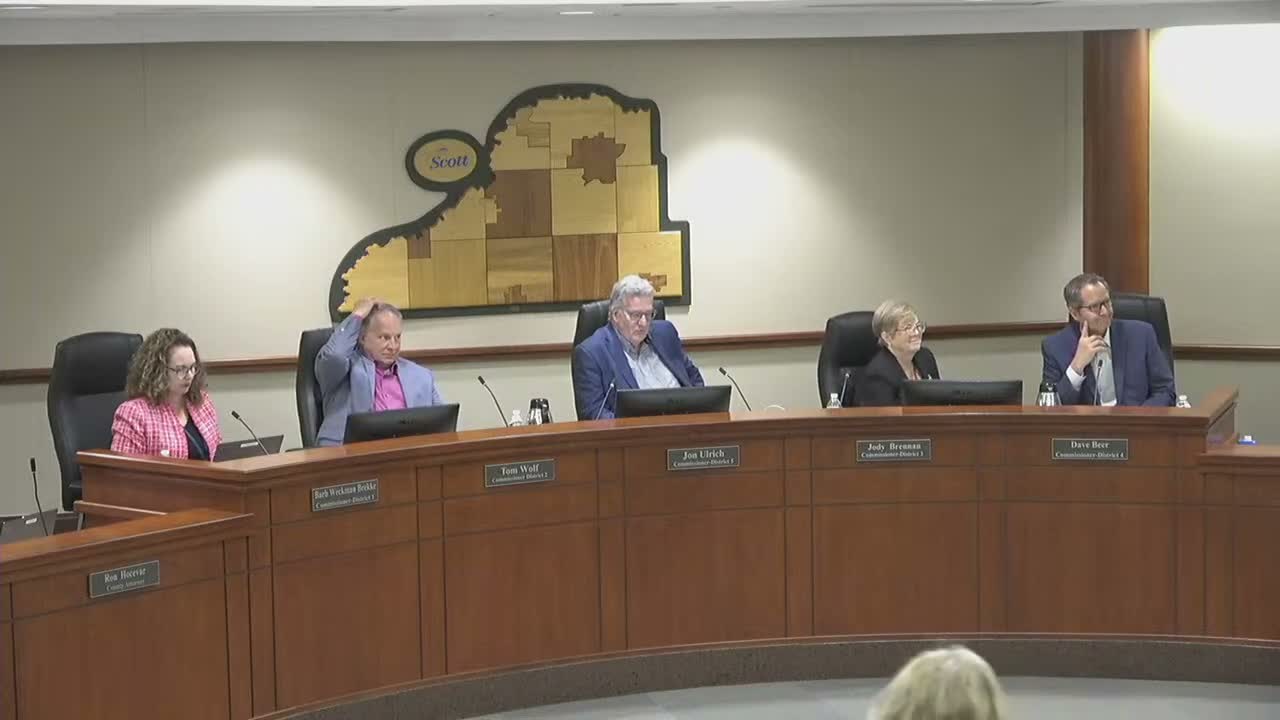
Summary
The board approved Resolution 2026-43 authorizing staff to submit comments on the Metropolitan Council's draft regional solicitation, raising concerns that a 20% scoring weight for "community considerations" and its definition could disadvantage suburban projects and pass-through users (freight and commuters).
At its Feb. 17 meeting, the Scott County Board of Commissioners adopted Resolution 2026-43 authorizing staff to submit a comment letter on the Metropolitan Council's draft regional solicitation and scoring criteria.
Greg Jensen, transportation planner, summarized the Met Council process and noted the Transportation Policy Plan goals (safety, resilience, active transportation, environment and an equity-centered community-considerations thread). Brad Davis, director of physical development, told the board that staff's proposed comments focus on the 'community considerations' criterion and how the region defines "community" for scoring purposes.
Davis said the draft definition treats community as a particular set of local users (residents immediately adjacent to a project) and does not explicitly include motorists, commuter traffic or freight users who travel through the project area. "Community is not going to be considered part of your community engagement," Davis said in the course of explaining staff concerns about how the criterion could affect suburban and regional projects.
Board members argued that pass-through and freight users are critical to projects such as the Highway 13 corridor, which serves agricultural and freight traffic for the wider region. Commissioners asked that the county request USDOT and the Federal Highway Administration to advise whether the solicitation's proposed harms-and-repair scoring approach and related socioeconomic measures are consistent with federal funding policy.
Staff also raised a procedural concern: active-transportation funding and the lack of any cap on the number of applications allowed per applicant could enable larger agencies to submit many applications and crowd out smaller jurisdictions. At the TAB (Transportation Advisory Board) level staff had recommended a two-application cap per agency; that recommendation did not move forward.
A motion to adopt Resolution 2026-43 was made, seconded and carried. Staff told the board they will submit the county's comment letter (including requests that the Met Council reconsider the definition and weight of "community considerations," ask FHWA/USDOT to review consistency with federal guidance and consider application-cap safeguards) later the same day.