Get Full Government Meeting Transcripts, Videos, & Alerts Forever!
Get email alerts on the Land Use topic
No spam. Unsubscribe anytime.
Oviedo council discusses code changes narrowing special‑event durations, clarifying farmers markets and permitting rules
Summary
Staff proposed Land Development Code amendments to make special events more flexible: removing single‑event‑per‑year limits, reducing a maximum permit duration from 14 to 3 consecutive days (extendable), reclassifying farmers markets as special events, and clarifying temporary sign and tent permit fee waivers; council asked staff to refine thresholds and return with a cohesive draft.
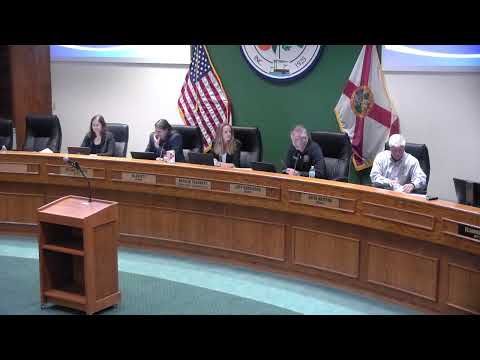
Oviedo — The City Council discussed proposed amendments to the Land Development Code that would change how the city handles special events and outdoor sales, including shorter allowed durations and clearer rules for farmers markets.
Development services staff presented three main amendments: remove the restriction limiting applicants to one event per calendar year for certain outdoor sales, reduce the maximum duration of a special event from 14 days to three consecutive days (with extensions possible by written request to the land‑use administrator), and allow no more than one special event permit per month for the same property and event. Staff said most special events already last less than three days.
"The duration of the activities of no special event permits shall be issued for more than 3 consecutive days," the presentation said; staff also said the 3‑day duration may be extended upon written request. Staff proposed treating farmers markets as special events rather than a distinct outdoor sales category so that recurring markets could be permitted on a monthly basis.
Council members asked for clarifications on exceptions and public‑safety oversight. Several members questioned an automatic trigger in the draft that would require a special event permit on non‑city property once attendance exceeded 200 people, arguing that the threshold should be scaled to parcel size or context (for example, a large mall designed to accept thousands of visitors). Staff said the threshold was intended to prompt police perimeter and crowd‑safety review but agreed to revisit how the metric is applied.
The council also discussed temporary sign permits and tent permit fees: staff clarified a tent permit breaks down into a $50 minimum fee, a $25 plan review fee and a $4 state fee, and that the city does not issue permits for bounce houses; the council discussed streamlining recurring permits for events that keep an unchanged layout so staff could issue a single annual permit with required inspections for tents and food trucks.
Seminole County representatives explained that many food trucks use propane and require fire inspections to check fittings and suppression equipment when parked at an event. The county described a sticker program for inspected food trucks and said a portable gas detector is used in routine checks.
Council directed staff to accept the proposed changes in principle but asked members wanting further adjustments (including how the 200‑attendee threshold is scaled) to meet with staff and return with a cohesive, revised draft; the item was tabled for revision and follow‑up.