Get Full Government Meeting Transcripts, Videos, & Alerts Forever!
Get email alerts on the Recreation Mill Levy Voter Approval topic
No spam. Unsubscribe anytime.
Committee approves bill to require voter approval and periodic renewal of school recreation mill levies
Summary
The Revenue Committee approved House Bill 127, which would require school district recreation mill levies to be submitted to voters and to return for reapproval every four years; clerks proposed election‑code amendments and supporters said the measure restores voter oversight, while recreation providers warned of funding instability and program losses. The committee passed the bill 7–2 after adopting clerks’ publication changes.
A sponsor presented House Bill 127 to require school recreation mill levies to be submitted to voters and, if adopted, to return to the ballot every four years for reauthorization. The sponsor said the bill responds to cases where school boards have enacted levies without direct voter approval and would give taxpayers a periodic chance to reevaluate ongoing levies.
Mary Langford, representing county clerks, told the committee the bill is administrable with two technical amendments: (1) strike duplicative publication language so notices are published once instead of twice, and (2) move administration of the measure into the bond‑election statutes (Chapter 22, Article 21) so county clerks have clear instructions on ballot and publication procedures. The committee accepted the clerks’ publication amendment.
Testimony split along lines of local control and operational impact. Mark Kapp and other Crook County residents urged the panel to restore voter voice, saying their school board approved a recreation mill despite broad local opposition. Former Representative Jeff Wasserburger and trustees warned the committee that the recreation mill was created as a local resource and that placing it on a frequent renewal cycle would limit districts’ ability to plan.
Recreation operators and advocates urged the committee to reject the bill or refine it narrowly to avoid destabilizing essential community services. Emmy Damato Riley and Chris Nelson described the Pinehill Aquatic Center’s reliance on rec‑mill funding and warned that a four‑year reauthorization requirement would introduce instability that could cost programs, staff and long‑term capital planning; Amber Anderson, president of the Wyoming Recreation and Park Association, said rec mills fund jobs and events and that frequent reauthorization would threaten operations statewide.
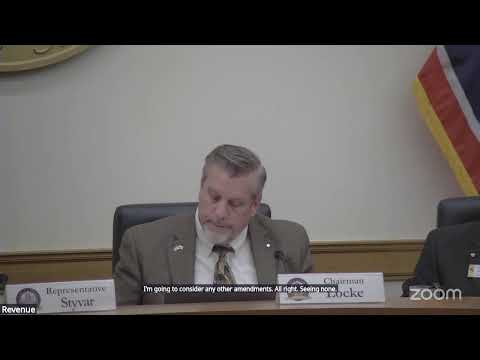
The committee accepted the clerks’ publication amendment on page 2, voted on the bill as amended, and the enrollment clerk recorded seven ayes and two noes. The bill passed out of committee; committee members and stakeholders signaled follow‑up work on election timing and possible additional drafting.