
House Judiciary Committee debates how to prioritize judiciary budget requests
Get AI-powered insights, summaries, and transcripts
Subscribe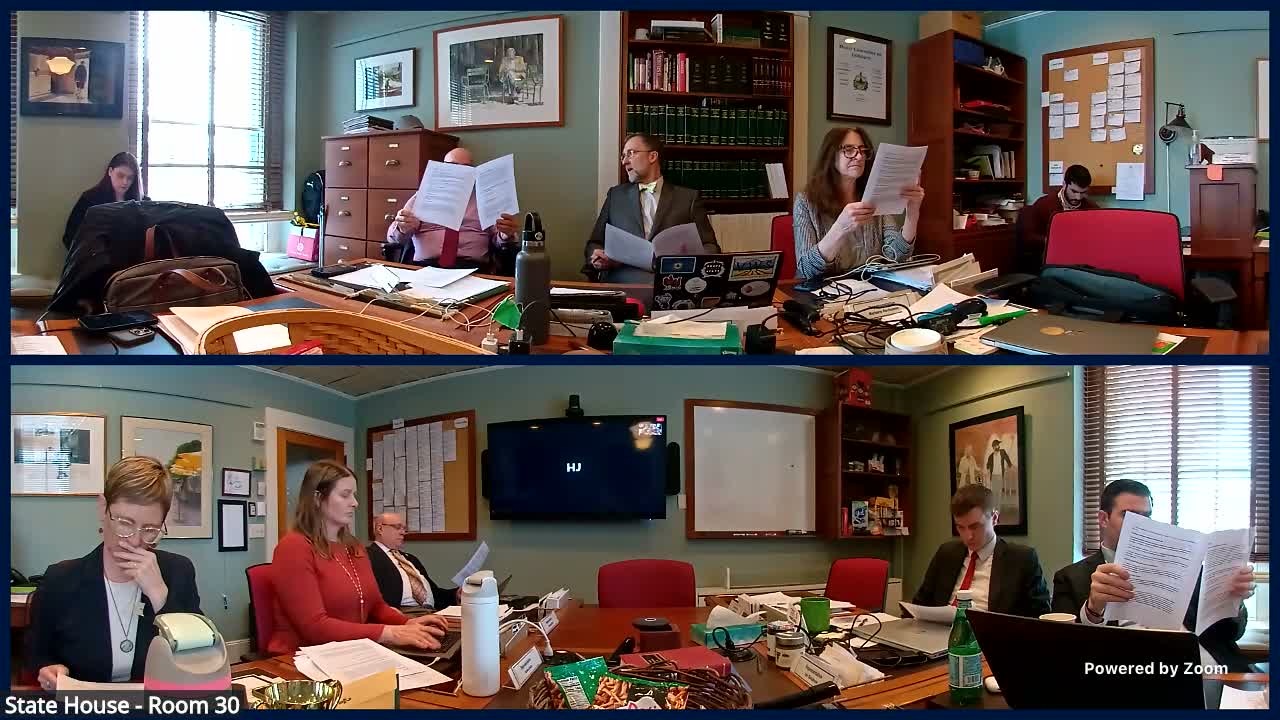
Summary
Committee members reviewed a tiered prioritization for judiciary-related budget requests and asked staff to return with clarifications on vacancy savings, limited-service positions, funding sources for victim services, and a proposed sheriff security-rate increase before making formal recommendations.
The House Judiciary Committee met Feb. 17 to discuss a budget memo it will forward to the appropriations committee and to establish priorities among judiciary-related funding requests. Speaker 1, leading the meeting, proposed grouping requests into tier 1 (higher priority) and tier 2 (secondary) items and asked members for feedback rather than moving immediately to votes.
Why it matters: the committee’s recommendations will shape whether courts, legal-aid providers and victim-service programs receive base funding or one-time grants, and whether staffing structures established to address backlogs become permanent. Members repeatedly warned that limited state revenues mean hard choices could lead to layoffs or reduced services.
Members pressed staff for additional fact-finding. Speaker 1 said the packet reflected what witnesses had told the committee but that several items required follow-up, including: an explanation of how 'vacancy savings' were being counted, confirmation of the sunset date for existing limited-service positions, a comparison of sheriff/security contracting in the executive branch versus the judiciary, and clarification about an inflationary line-item request.
The committee heard that last year the network against domestic violence received a one-time $450,000 appropriation and is asking to put that money in the base. Speaker 4 pointed out that of the $450,000, only $200,000 would be retained by the network and the rest distributed to member organizations. Members flagged the additional $717,000 request for a statewide supervised-visitation system and asked whether that item belongs in the human-services budget (Department for Children and Families) rather than the judiciary memo.
On court staffing, members debated converting limited-service positions — often used to address COVID-era backlogs — into permanent roles. Several members said limited-service roles were intended to sunset after the backlog eased; Speaker 5 noted the risk of turnover if positions lose continuity or benefits.
Speaker 4 also raised a request to raise certain security/sheriff pay from about $57 an hour to $75 an hour. Members said that change could add millions to the judiciary budget and asked staff to provide a comparison of executive-branch contracts to the judiciary’s contract before the committee endorses an increase.
Next steps: the committee recessed and Speaker 1 said staff (including Trevor) would be asked to provide the requested clarifications. Members agreed to digest the packet and continue discussion before Friday’s deadline.