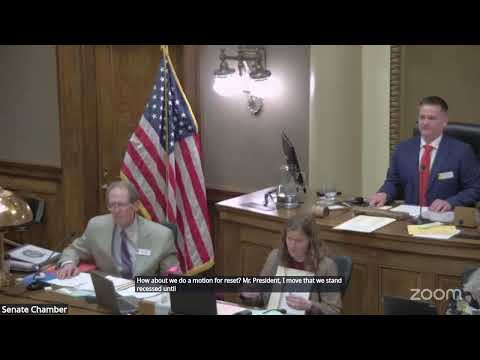
Senate passes measure tightening Medicaid eligibility rules, saying future expansions must have legislative approval
Loading...
Summary
The Wyoming Senate on Feb. 17 passed Senate File 6, which clarifies Medicaid eligibility and states that future expansions beyond a fixed date require legislative approval; supporters said it preserves legislative control while critics called it overly restrictive for some working families.
CHEYENNE, Wyo. — The Wyoming Senate on Feb. 17 passed Senate File 6, a bill that clarifies eligibility for Medicaid and states that any expansion beyond a specified date will require explicit legislative authorization.
Senator Case (Fremont County) urged colleagues to remove the bill from consent and later criticized it on the floor as unnecessary and restrictive, saying "this bill seems to double down on saying, the door is closed" for many working mothers and families. He said Wyoming already has strict criteria and the measure could leave vulnerable residents without access.
Sponsor Senator Scott responded that the bill clarifies an existing statutory framework. He told the Senate the chief purpose is to ensure any expansion of eligibility requires legislative consent and to limit eligibility to Wyoming residents and U.S. citizens, with narrowly defined exceptions. Scott said the change mostly codifies practice and should not materially harm hospitals or providers.
The Department of Health was noted as having participated in drafting during committee. Senator Hutchings confirmed the department had a "good say" in committee drafting.
Vote and outcome: After floor debate, the chief clerk called a recorded roll; the bill passed with an announced tally of 28 ayes and 3 nos. The chief clerk declared that Senate File 6 "has passed the senate."
Context: Sponsors argued the bill preserves legislative oversight over eligibility expansions and provides clarity for future federal proposals; opponents said it could prevent needed access to medical assistance for working families.
Ending: The Senate moved on to other third‑reading items after the vote. The bill now advances according to Senate procedure to the next steps in the legislative process.