
Senate committee holds bill to let state contract precious-metals payment platforms after heated testimony
Get AI-powered insights, summaries, and transcripts
Subscribe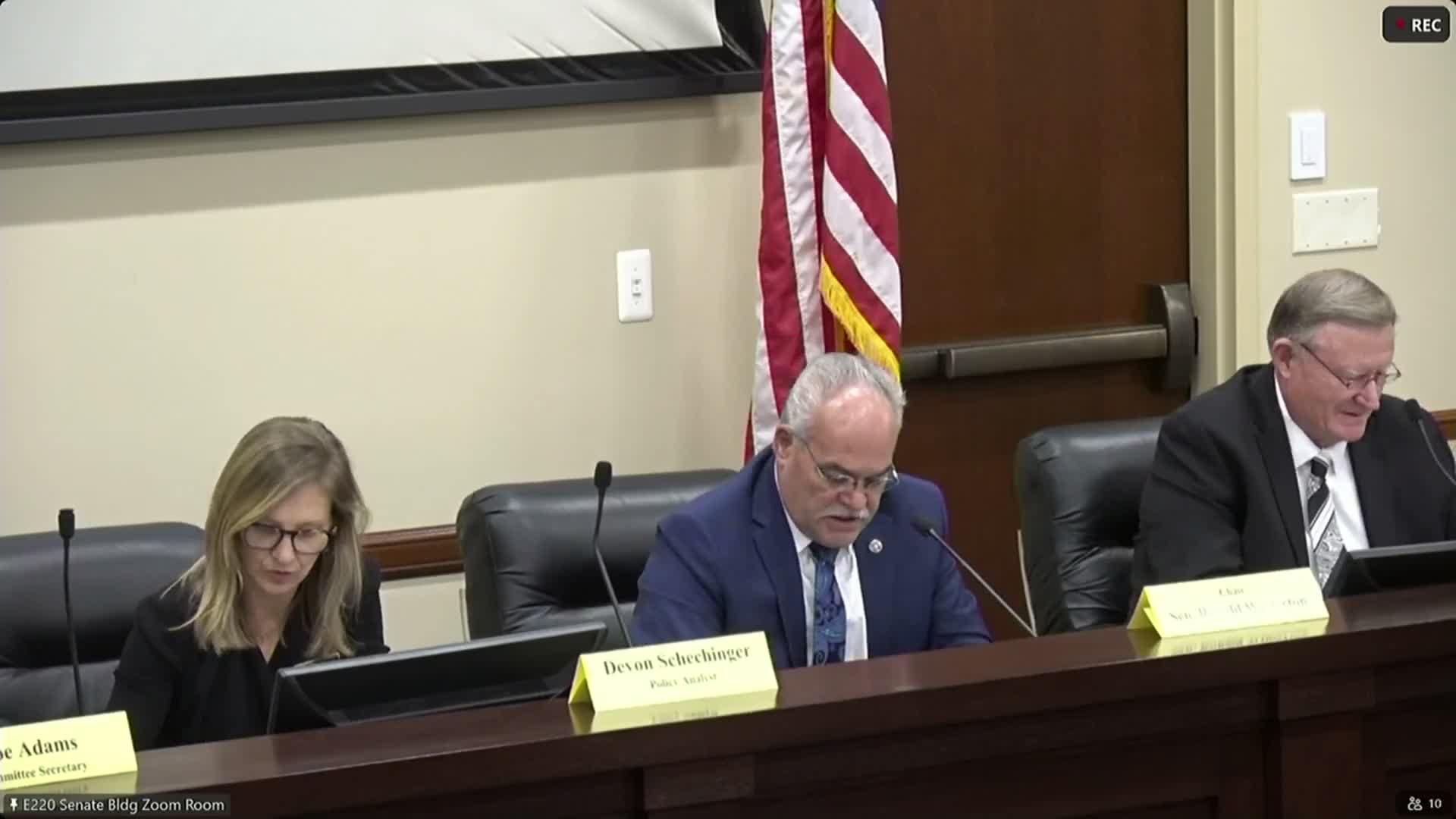
Summary
House Bill 195 would let the state procure one or more private platforms that convert vendor payments into gold- or silver-backed accounts; supporters said the change builds trust and challenges federal tax treatment, while industry witnesses warned it risks government competition and regulatory gaps. The committee deadlocked and held the bill for further consideration.
Representative Ivory introduced House Bill 195 (first substitute), a proposal to let the state select one or more private precious-metals-backed electronic payment platforms so vendors could elect to receive payment credited in gold or silver.
Marlowe Oakes, Utah state treasurer, told the Senate Government Operations and Political Subdivisions Committee the bill ‘‘does not purchase precious metals’’ on behalf of vendors. "The state is becoming a customer of one or more platforms," Oakes said, describing the measure as a competitive procurement similar to how the state acquires banking services. He said platforms would convert transmitted dollars into precious-metals-backed credits, with the physical metals vaulted in Utah, audited and redeemable at vendors' discretion.
Supporters framed the bill as a way to make gold and silver a practical transactional medium. Mike Carter of the National Security Investment Consultant Institute said the legislation "sets up the rails" so free markets can innovate, adding, "This is not a state takeover." Mary Ann Christiansen of Utah Legislative Watch argued the change could help Utah reduce reliance on the dollar amid global monetary shifts.
Industry witnesses and other opponents urged caution. Kim Coleman, director of strategic relations for Goldback, asked the committee not to let government "compete with" a thriving private market, testifying that private providers already offer the needed services and that the state risks picking winners by entering the market. Stefan Gleeson, CEO of Money Metals Exchange, warned the proposal appears to shift the state from regulator toward asset custodian without clear involvement of securities regulators; he said the plan could run afoul of Utah's uniform securities framework and cited past fraud in the sector as a reason to keep regulators involved.
The sponsor and treasurer emphasized changes made after last year's veto, including clarifying this version allows selection of ‘‘one or more’’ vendors through an open RFP and is not a single-vendor contract. Representative Ivory and the treasurer also noted the state previously authorized a limited rainy-day investment in gold (House Bill 348) and said HB195 is narrower in scope.
After extended discussion and public comment that included both industry opposition and private advocates, Senator Plum moved to recommend the first substitute favorably to the full Senate. The committee produced a tie vote and the chair announced the bill would be held in committee pending an additional vote; a full roll-call tally was not provided in the hearing record.
What happens next: HB195 remains in committee; sponsors said they will continue briefings and education for members and may return with further technical clarifications or additional information from the procurement process.