Get Full Government Meeting Transcripts, Videos, & Alerts Forever!
Get email alerts on the Transparency And Access topic
No spam. Unsubscribe anytime.
Council adopts resolution to make city meetings publicly accessible; city attorney flags upcoming ADA website rules
Summary
Council adopted a resolution to make specified city meetings accessible to the public through streaming/archiving (YouTube/Swagit) and included language to comply with federal and state accessibility laws; the city attorney noted new DOJ website accessibility rules with compliance required by April 26, 2027 for jurisdictions under 50,000 population.
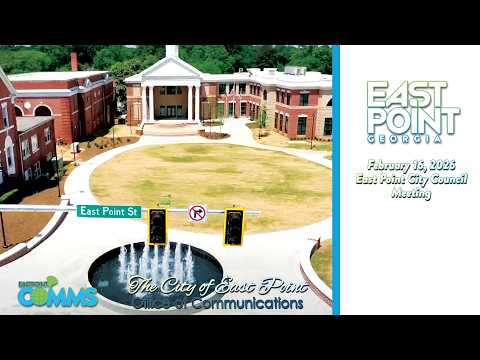
On Feb. 16 the East Point City Council adopted a resolution to expand public access to city meetings by making them available through streaming and public platforms (e.g., YouTube and the city’s Swagit system). The resolution includes language directing staff to follow applicable federal and state accessibility standards. Councilmember Hemming moved adoption and Councilmember Martin Rogers seconded; the motion carried by voice vote.
City Attorney reminded the council of forthcoming DOJ guidance on website accessibility that will require several technical features and gave a compliance deadline for East Point (based on its population threshold) of April 26, 2027. The attorney urged coordination between IT and communications to ensure archived and streamed materials meet accessibility requirements (captioning, alternative text, color contrast, keyboard navigation, etc.).
Council discussion covered implementation timing, storage capacity, and staff workload for processing and hosting recordings. The resolution directs the city manager and IT staff to advise on implementation details, including storage and licensing options, while preserving the city’s records‑retention obligations.