Get Full Government Meeting Transcripts, Videos, & Alerts Forever!
Get email alerts on the Capital Plan Financing topic
No spam. Unsubscribe anytime.
Westmoreland County boards endorse testing market for joint $18.5 million capital plan
Summary
A Davenport financial review found Westmoreland County is "structurally balanced" and recommended a three‑part financing approach and a $2.6 million capital reserve to cover near‑term school and county projects totaling roughly $18.5 million; boards authorized staff to issue RFPs to test financing options.
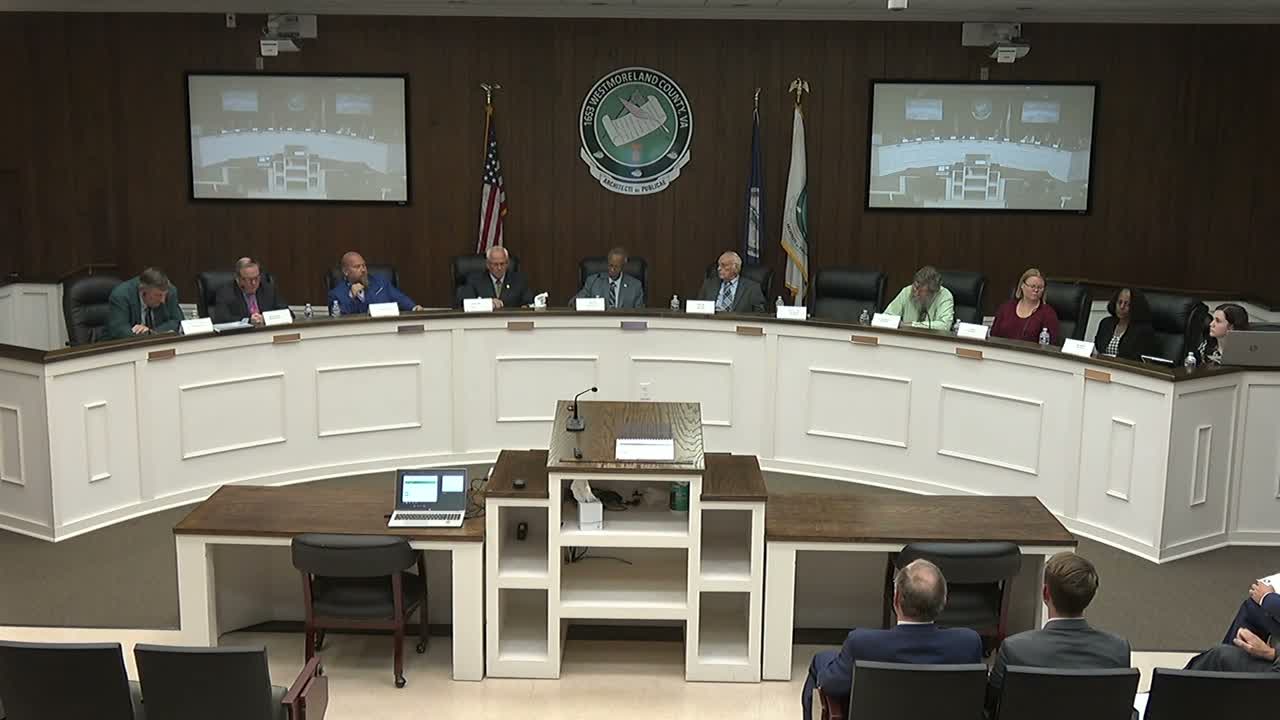
David Rose of Davenport told a joint meeting of the Westmoreland County Board of Supervisors and the Westmoreland County School Board that the county’s finances are in strong shape and presented a three‑part plan to fund near‑term capital needs.
"This County by virtue of the actions that have been taken by the board of supervisors is structurally balanced," Rose said, summarizing Davenport’s executive findings and noting the county holds two AA credit ratings. He said preliminary, pre‑audit results for fiscal 2025 are expected to add about $1,000,000 to the unassigned (rainy‑day) fund balance.
Why it matters: Davenport identified roughly $12.5 million of long‑term needs and about $6 million of short‑term assets across county and school requests — a total near $18.5 million — and recommended financing so that the county can address pressing projects now without compromising its credit guardrails.
The three parts of the proposed financing are: permanent 20‑year debt for an immediate $6 million of long‑lived projects; interim financing (up to five years) for the balance of long‑term needs to delay full debt service until current obligations decline; and a master‑lease structure to cover shorter‑lived assets such as vehicles and ambulances. Davenport modeled a conservative 5% rate in its presentation and said under conservative assumptions the plan could equal an ‘‘equivalent of about 3 pennies’’ of tax impact after the 2029 reassessment; the firm also noted the figure could be lower if interest rates or assessed values change.
County Administrator Jim Taylor said staff will work with Davenport, bond counsel and local finance partners to draft a memorandum of agreement (MOA) that allocates which projects are funded and how repayment responsibilities are assigned. "If the plan is approved, it'll be based on the projects that are identified," Taylor said, describing how identified school projects would have secured access to their allocated share of bond proceeds.
Board members pressed for detail on repayment and project allocation. Supervisors asked whether twice‑a‑year tax billing — a step Davenport said could yield an estimated $9 million in additional cash flow — would require a referendum; Davenport said it is typically implemented administratively by local tax offices rather than by ballot, though staffing needs and administrative costs were noted.
The boards agreed, by consensus, to let staff test the market: Davenport will issue requests for proposals the week of the 13th, return with financing options around Halloween, and report to the Board of Supervisors on Nov. 12 and to the School Board on Nov. 17.
Next steps: Staff and Davenport will return with RFP results, draft MOA language and a recommended financing package for board review. If boards decide to proceed, bond counsel and staff will bring back specific borrowing terms, legal documents, and project allocations for formal approval.