
Harrisburg council advances ordinance to limit city cooperation with federal immigration enforcement
Get AI-powered insights, summaries, and transcripts
Subscribe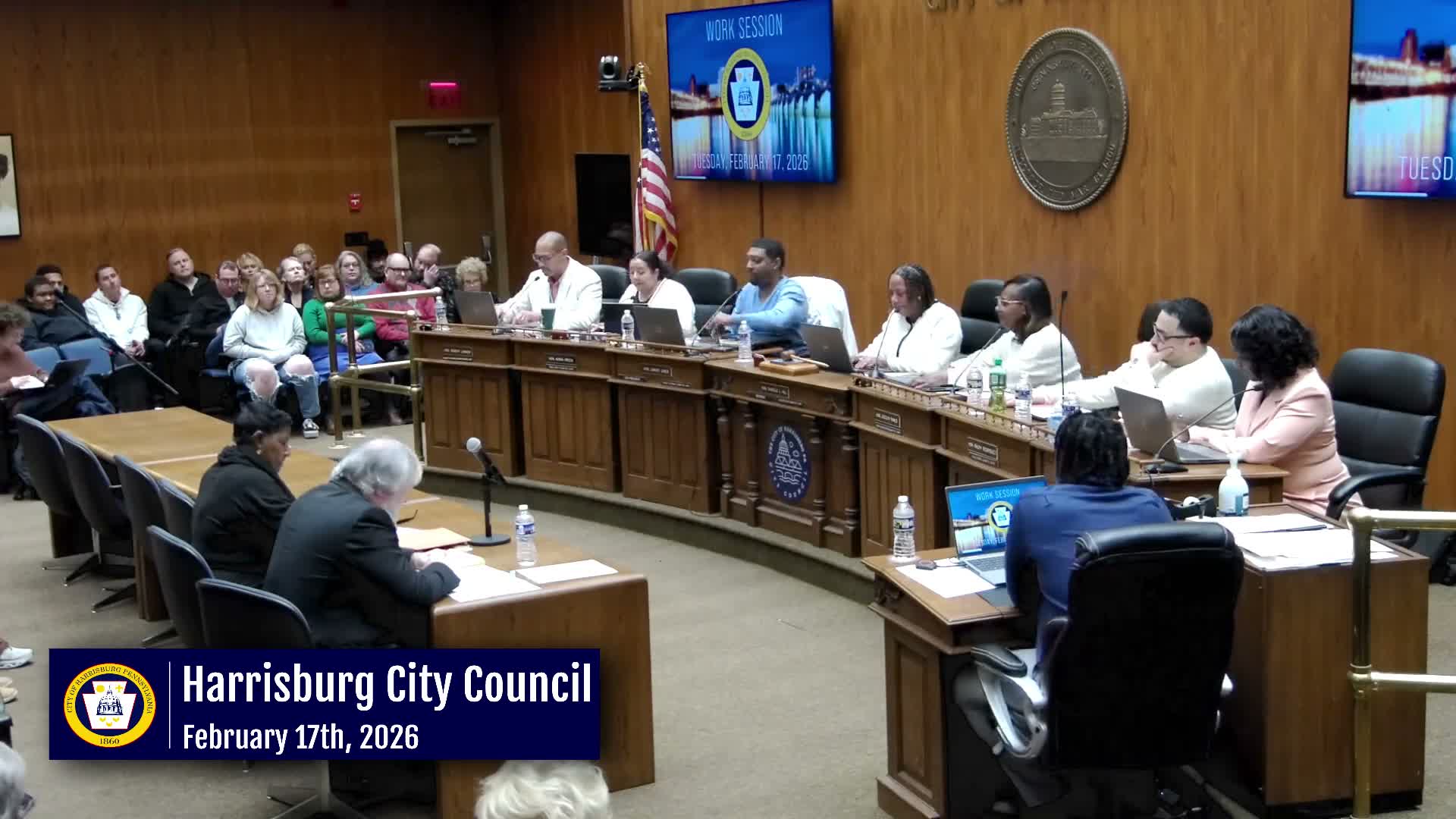
Summary
At a Feb. 17 work session, Harrisburg City Council reviewed Bill 1 of 2026, a draft ordinance that would bar city officials from using city resources to assist federal civil immigration enforcement and would restrict access to nonpublic city facilities without a valid judicial warrant; council moved the draft to next week’s legislative session for possible amendments and a vote.
HARRISBURG — At a Feb. 17 work session, Harrisburg City Council’s public safety committee reviewed Bill 1 of 2026, a proposed ordinance that would limit city involvement in federal civil immigration enforcement and prohibit city officials from using city funds, personnel, technology or facilities to assist civil immigration actions absent a valid judicial warrant.
Councilwoman Green, who led the session, told residents the draft aims to make clear that "not just police, fire, and codes within every department in the city" should take immigration status into account only when required. She said the ordinance defines "federal immigration authority" and "judicial warrant," and would bar employees from granting federal immigration agents access to nonpublic city facilities without a warrant.
The bill, as read, would prevent "any city official or employee" from using city "funds, personnel, equipment, data, technology, property, or facilities to assist in the investigation, detention, or arrest of any person solely related to a violation of federal immigration law." The draft also directs that access to nonpublic city facilities and to individuals in city custody may not be granted to federal immigration authorities without a valid judicial warrant.
Solicitor Grover warned council and the public that the scope of federal agency powers is evolving and fact-specific. He said federal agents may lawfully enter public spaces but that questions arise when they seek access to private or secure offices, and he distinguished between judicial and administrative warrants. "You get down to the question, do you have a valid warrant," he said, describing the issue as legally and operationally nuanced.
Members emphasized both the urgency of protecting residents and the need for careful drafting. Vice President Jones told the room the process will continue: the bill has had a first reading and a work session and is expected to go to a legislative session next week for amendments and a vote. "We do hear you," Jones said, adding that the council must balance protections with avoiding legal exposure for the city.
Public comment was extensive and frequently urgent. Residents described recent detentions in neighborhoods, urged the city to withhold access to local databases and facilities that could aid enforcement operations, and asked the council to consider measures modeled on "welcoming city" ordinances used elsewhere. Several speakers encouraged the city to publish "know your rights" information in multiple languages.
The transcript records a sharp comment from Councilman Rodriguez, who said ICE "operates more like W W 2 Nazi Germany in opposition to modern society policing," a characterization he used to underscore the perceived severity of federal enforcement tactics. Solicitor Grover and other council members acknowledged legal limits and warned that some protections could invite litigation if not carefully grounded in state and federal law.
Council members agreed to move the draft to the next legislative agenda to allow for formal amendments and a recorded public-comment period; President Hill announced the legislative session is scheduled for Tuesday, Feb. 24 at 6:00 p.m. The work session adjourned at about 7:07 p.m., after a motion to adjourn was made (a second was not recorded in the transcript).