Get Full Government Meeting Transcripts, Videos, & Alerts Forever!
Get email alerts on the Shoreline Protection topic
No spam. Unsubscribe anytime.
Board approves shoreline protection permit for William Kennedy at Summer Drive
Summary
The Westmoreland County Wetlands Board granted a three‑year permit for case 1495 to install a backshore revetment and a 140‑foot offshore breakwater with beach nourishment and limited wetland plantings to protect an eroding bank near a dwelling at 118–124 Summer Drive (VMRC No. 25‑1368).
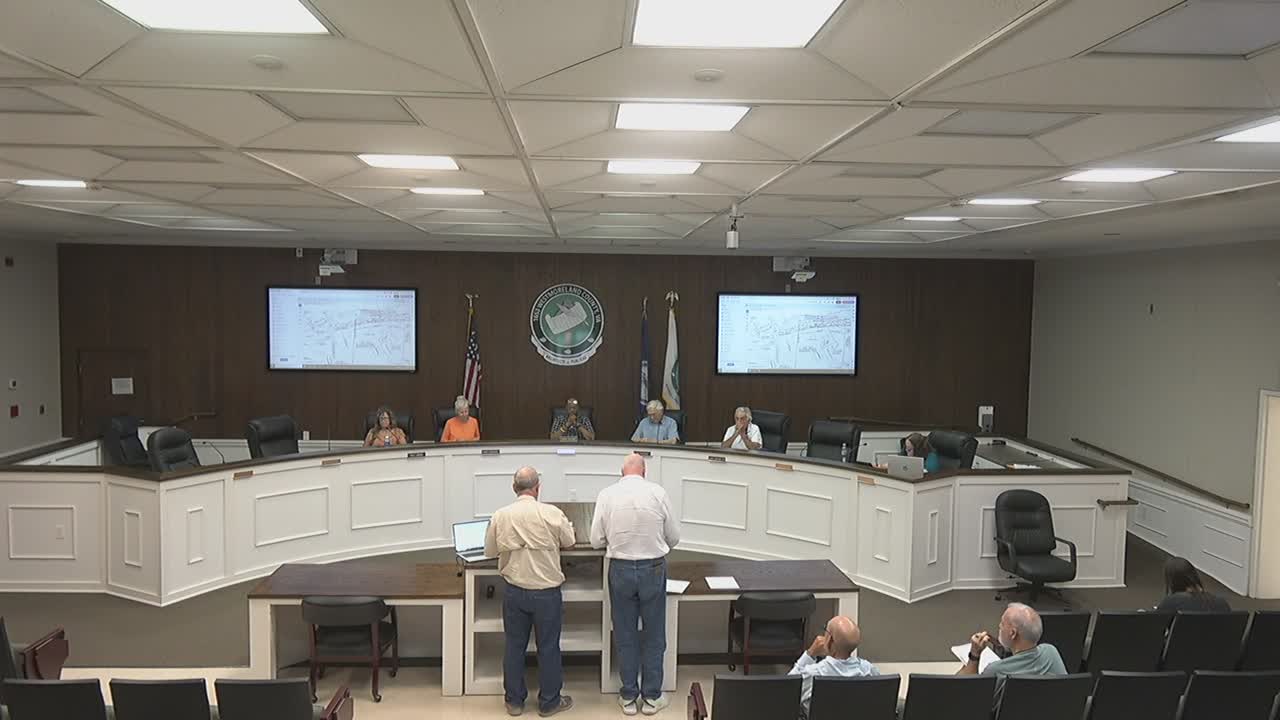
The Westmoreland County Wetlands Board voted to approve wetlands case 1495, granting a three‑year permit for work at 118 and 124 Summer Drive that the agent described as a backshore revetment to protect a house near a high bank and a 140‑foot armor‑stone offshore breakwater with approximately 400 cubic yards of beach nourishment and plantings.
Craig Palovinski of Bayshore Design, representing property owner William (Bill) Kennedy, told the board the revetment is intended to protect a bank that has experienced "severe erosion" and that the proposed breakwater and nourishment will act as the frontline defense to dissipate wave energy. "The revetment is about 6 feet by 12 feet in width ... the breakwater again, is class 3 armor stone ... plus 4 to plus 5 feet above mean low water up to a 22 foot base width," Palovinski said during the presentation.
Public comment included support from Sharon Shomette, a Chippewa homeowners association maintenance committee member, who called the project "mutually beneficial" for the community beach and property owners. Patricia Richards, a longtime resident and biologist, urged action to stem long‑term shoreline loss, citing regional shoreline changes and arguing the proposed hybrid approach (hard structure plus wetlands plantings) may help preserve shoreline amenity value.
Board members asked technical questions about the breakwater geometry, and Palovinski explained the slight bends at the breakwater ends were intentional to reduce diffraction and dissipate wave energy offshore. Staff reiterated that the project follows the VIMS best practice approach of offshore breakwater plus nourishment and noted requirements tied to VMRC and possible Army Corps review.
After discussion, the board approved the permit with recorded Ayes; staff reminded applicants to wait 10 days before mobilization to allow for appeals. The approval is subject to any further agency conditions required by VMRC or the Army Corps of Engineers.
Next steps: the permit becomes effective unless appealed within the 10‑day window; applicants should coordinate with staff and VMRC on final construction sequencing and compliance documentation.