Get Full Government Meeting Transcripts, Videos, & Alerts Forever!
Get email alerts on the Historic Preservation topic
No spam. Unsubscribe anytime.
Historic-preservation commission conditionally approves Bethel AME Church window replacements, bars cladding of surrounds
Summary
The commission conditionally approved replacing 39 windows at Bethel AME Church (302 N. Rogers) but declined to permit aluminum cladding over existing wood surrounds; staff recommended conditional approval because some windows show extensive rot and an energy-audit estimated $750–$2,000 per window.
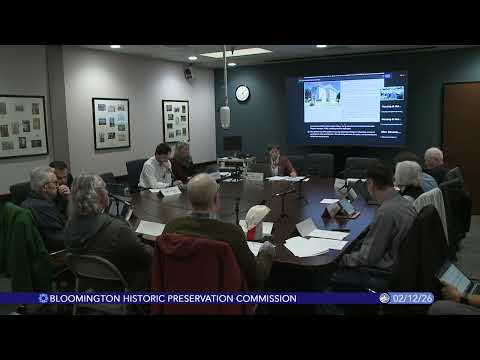
The Bloomington Historic Preservation Commission on Feb. 12 conditionally approved a request from Bethel AME Church to replace 39 windows at 302 North Rogers Street, but the commission did not grant approval to cover existing wood surrounds with aluminum cladding.
Noah, the city's historic preservation program manager, told commissioners the church's windows range from intact to severely deteriorated and that the project's energy audit estimates replacement costs between $750 and $2,000 per window for units with interior simulated divided lights. Noah recommended conditional approval for the window replacements while reserving a prohibition on covering the trim: "This would be conditional approval for the replacement of the windows, but not for covering the surrounds," he said.
Petitioner Alan Edmonds described onsite damage and an urgency driven by supplier pricing, saying the congregation hoped to move paperwork and partial payment quickly: "We expect a price increase for orders submitted on or after Monday, February 23," Edmonds said. Valerie Graham, speaking during public comment as a church volunteer, said the team inspected windows both inside and out and found areas where wood rot and termite damage required full replacement rather than simple repair.
Commission discussion centered on whether every window had been individually evaluated. Commissioner Duncan said the preservation standard is to grade each window and, where feasible, retain or repair original fabric: "Usually, we make a sheet that replicates what the window looks like… and then evaluate the work based on that need." He acknowledged, however, the congregation's limited resources and the practical case for prioritizing the worst‑deteriorated windows.
Several commissioners urged the petitioner to pursue outside funding. Commissioner Ernesto Castaneda recommended contacting Indiana Landmarks and its Black Heritage Preservation and Sacred Sites programs for potential grant assistance; staff noted the Black Heritage awards range from about $500 to $30,000 and Sacred Places grants from $25,000 to $500,000. Commissioner Karen Duffy and others emphasized that storm windows or targeted repairs could be alternatives if full replacement was not strictly necessary.
By roll call the commission approved the staff-recommended conditional COA, with the motion reflecting commissioners' direction that wood frames and surrounds not be clad in aluminum and that repainting or in-kind replacement remain options handled in keeping with guidelines. Commissioners said staff and the petitioner should follow up on the eligibility for grant programs and on any clarifications required for the final permit.
The commission's action allows the congregation to proceed with the window replacements subject to the condition that wood surrounds not be obscured by new cladding. The petitioner and staff said they would coordinate next steps, including consultation about grant opportunities and a clear timeline for construction and partial payments.