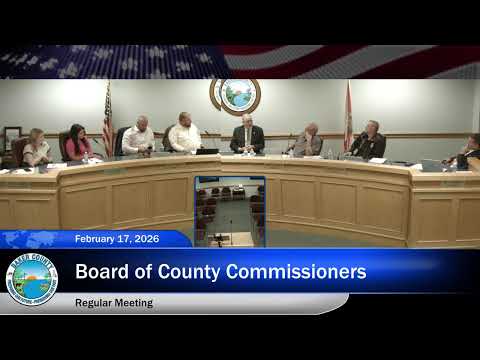
Regional council presents vulnerability assessment; Baker County accepts report
Loading...
Summary
Northeast Florida Regional Council presented a year‑long vulnerability assessment showing riverine and rainfall‑driven flood risks, transportation chokepoints and historic‑asset exposure. Commissioners accepted the report and asked staff to use its data to pursue adaptation grants and prioritize road access projects.
The Northeast Florida Regional Council presented the results of a year‑long vulnerability assessment for Baker County, and commissioners voted to accept the report.
The presenter, identified from the council as Andrew (speaker 12), summarized the state‑required analysis that mapped exposure, social vulnerability and natural resources across quarter‑mile hexes. He said the county’s principal flood risks are riverine flooding and heavy rainfall, not storm surge, and highlighted areas where key transportation links and historic assets — including cemeteries and bridges near McClenny — are at significant inundation risk. “We’re hurting for water right now,” a separate county‑scale water shortage advisory noted earlier in the meeting, underscoring the county’s water‑management concerns.
The assessment combined inventories of critical assets (bridges, airports, evacuation routes, historic structures), hydrology and future extreme‑rainfall projections for planning horizons to 2040 and 2070. Staff and regional partners said the analysis will help the county prioritize “shovel‑ready” projects, strengthen grant applications, and push the state to address repeatedly flooded segments of County Road 127 and U.S. 90.
Commissioners and staff discussed next steps: using the data to press FDOT for targeted roadway work, advancing green‑infrastructure pilot projects identified in a recent design charette, and developing an adaptation plan to guide investments. The board voted to accept the assessment and directed staff to make the underlying GIS layers available to county departments and potential grant partners.
The presentation and acceptance create a foundation for future mitigation and grant work; staff said they will return with project‑level cost estimates, recommended prioritization, and potential funding sources.