
Committee reviews H.718 amendments to study residential building code, create contractor task force and add limited appropriations
Get AI-powered insights, summaries, and transcripts
Subscribe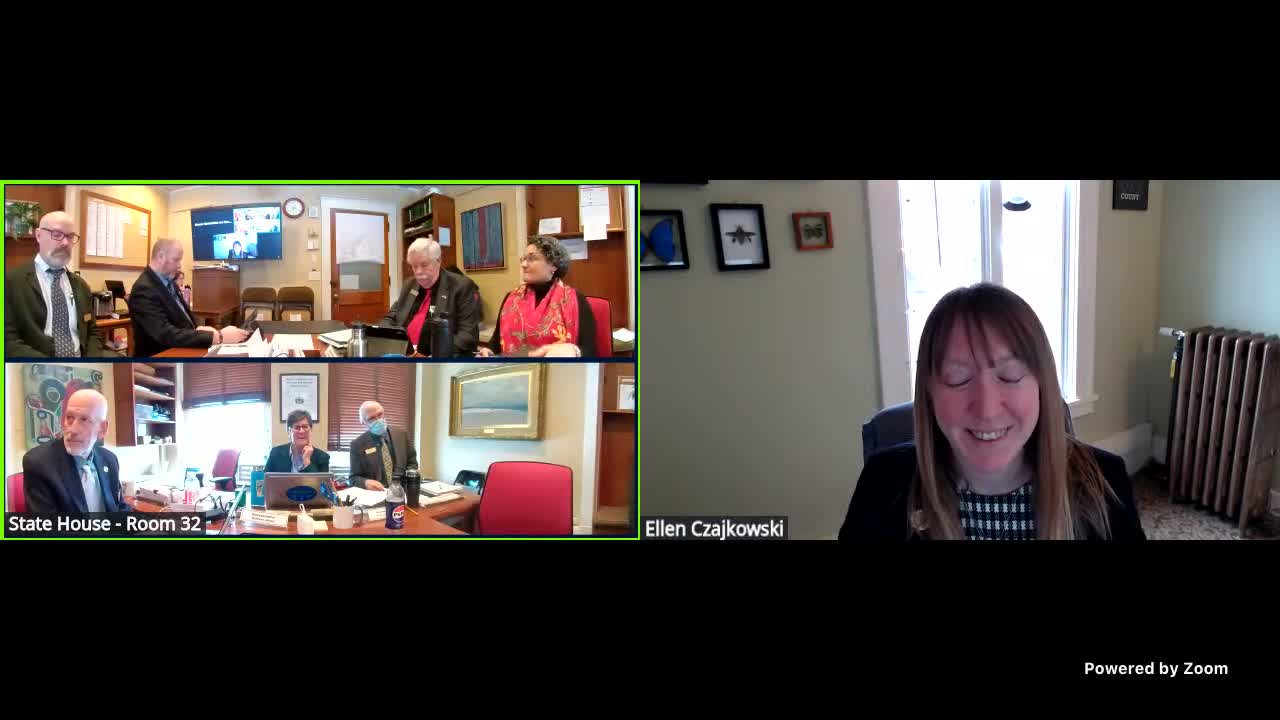
Summary
The House Environment & Energy committee reviewed draft 1.2 of H.718, which replaces an immediate mandate to adopt a residential building code with a directed assessment due Jan. 15, 2027, expands a residential contractor registry task force, and proposes RGGI-funded technical support and modest appropriations for implementation.
The House Committee on Environment & Energy on Feb. 18 reviewed draft 1.2 of H.718, a bill that would change how Vermont approaches residential building energy codes and contractor oversight.
The committee heard from Ellen Shankowski of the Office of Legislative Council, who walked members through amendments that add a new finding and replace the earlier directive to adopt a residential building code with a mandated assessment. "Vermont has not adopted a residential building construction code applicable to 1 and 2 unit dwellings," Shankowski said, noting that absence of a code means there is no consistent administrative infrastructure for enforcing energy codes and that lack may limit the state's access to certain federal funding.
The bill language now requires the Director of Fire Safety to complete an assessment and submit recommendations on whether and how the state should adopt a residential building code on or before Jan. 15, 2027, and to report to the House committees on Energy and Digital Infrastructure and on General and Housing, and to the Senate Committee on Economic Development, Housing, and General Affairs. The change replaces earlier language that had directly directed adoption and funding for code implementation; witnesses from the Department of Public Service (DPS) and Division of Fire Safety informed the compromise.
The draft also revises the residential contractor registry task force. Membership grows from 11 to 15, adding a representative from Weatherization Assistance, a member of the Vermont Attorney General's Office, representation from the Associated Builders and Contractors of New Hampshire and Vermont and the Associated General Contractors of Vermont, a governor-appointed residential contractor who is not affiliated with those associations, and a governor-appointed public member. The task force's duties include assessing whether energy-education modules (statutorily referenced in 3 V.S.A. § 138) should be administered by DPS; whether the regulation of residential contractors should move from registration to certification or licensure; and whether regulatory responsibility should be transferred from the Office of Professional Regulation (OPR) to the Division of Fire Safety.
On enforcement, the committee reviewed language that would allow municipalities to incorporate by reference the residential (RVs/RBs) and commercial (CVs) energy-code standards established in state statutes so municipalities can adopt and enforce those standards through local building code administration rather than create their own distinct energy codes. Shankowski noted that Burlington and Montpelier previously sought charter changes to adopt energy standards because municipal authority has not been clear; the draft aims to make incorporation and local enforcement explicit.
Committee members questioned a proposed transitional "safe harbor" that would protect builders who filed compliance certificates using the governor's executive order (which allowed reliance on either the 2020 or 2024 compliance paths). Several members expressed concern about an open-ended safe harbor while rulemaking is in progress. Alan (of the Attorney General's Office) told the committee that the AG's office has issued an opinion that the executive order likely exceeds the governor's authority with respect to the RV and CV statutes and that private rights of action in those statutes could create legal ambiguity for owners and certifiers if builders rely on the executive order. The safe-harbor language in the draft is intended to mitigate that potential legal risk for builders while the rulemaking process proceeds.
On schedule and reporting, the bill requires the task force to begin annual reporting in 2026 with reports due on or before Nov. 1, and sets a goal for the task force to launch a consumer-facing website and outreach plan on or before Dec. 31, 2027. The draft includes appropriations to support outreach and technical assistance and consolidates per-diem funding for task-force members into a larger appropriation.
The committee did not vote on H.718 during this session; members asked for clarifications and signaled additional testimony (including from VLCT and builders/architects) at upcoming hearings. The next procedural steps were scheduled: further testimony and a committee discussion the following day on multiple bills including H.718.