
Whitewater groups ask Valley County to allow limited, seasonal motorized use on Payette River
Get AI-powered insights, summaries, and transcripts
Subscribe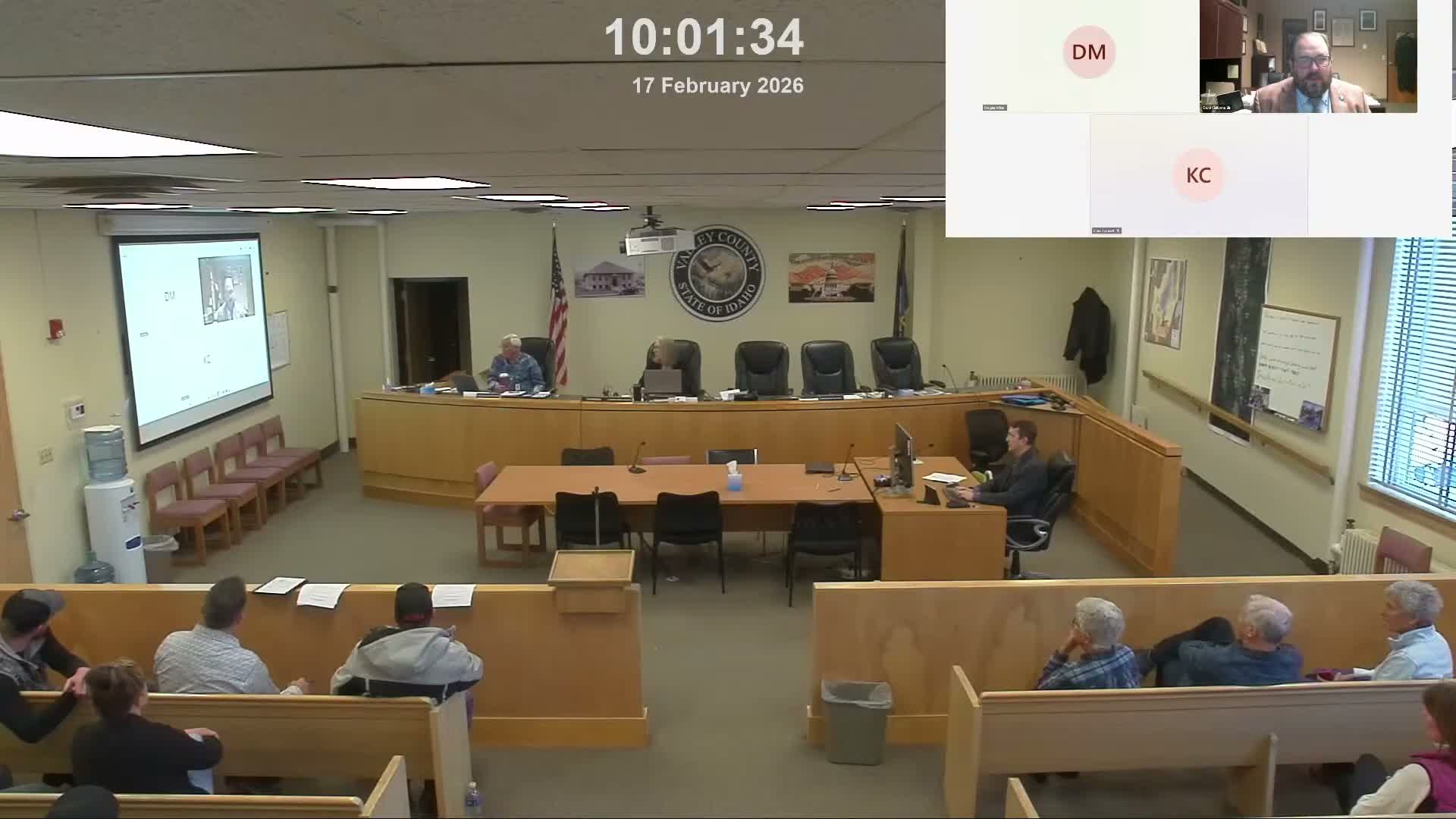
Summary
At a Feb. 17 Valley County commissioners meeting, the Western Whitewater Association and Idaho Recreation Council proposed redline changes to the county waterways ordinance that would allow limited motorized boat access at certain times of year and create a no-wake season for flat-water fishing; commissioners scheduled further workshops and civic engagement before any change.
David Claiborne, an attorney representing the Western Whitewater Association and the Idaho Recreation Council, presented proposed language to the Valley County commissioners on Feb. 17 asking the county to revise its waterways ordinance to permit limited motorized use on the Payette River and to create a seasonal no-wake safe-water zone.
Claiborne said the groups submitted a redline of the ordinance and proposed allowing motorized vessels between Smiley Lane and Payette Lake from April 1 to June 30. He also proposed a second change to the larger stretch from Lake Cascade to Payette Lake to establish a no-wake safe-water season from July 1 to Sept. 30, which would permit slow electric trolling motors for flat-water fishing but discourage wake-producing craft.
"We sent a letter to the county on October 6," Claiborne said, referring to the submitted redline and asking the commission to consider the technological advances in small craft that allow safe navigation of the stretch. He described the proposal as a shared-use compromise intended to balance motorized and non-motorized recreational access.
Sean Schnittger, vice president and president-elect of the Western Whitewater Association, told commissioners that his nonprofit represents jet-boat users and that only a small group — he estimated about 15 boats for this stretch — would use the river if access were allowed. "Idaho waterways are one of the state's greatest gifts and need to remain open in perpetuity," Schnittger said, reading lines submitted with a petition and arguing the vessels are not causing greater bank erosion than seasonal high flows.
Commissioners asked about safety and collisions; presenters said they were not aware of any injuries tied to jet-boat use on the section prior to the 2020 closure and emphasized driver training and coordination with local law enforcement. The chair noted there are videos showing reckless behavior and said the county must plan for future changes in recreation use levels when updating safety rules.
Representing the Idaho Recreation Council, Shay White urged caution about precedent. "What's stopping [this] commission coming in and shutting down the Salmon River? What's stopping ... shutting down the Salmon River to motorized? That's a very, very slippery slope," she said, warning that reopening one stretch could influence broader statewide policy and affect parks-and-rec grants.
The commission did not take action. Commissioners recalled a lengthy advisory process that led to a 2020 ordinance update and said the county will include this issue in a working group and public workshops. The chair scheduled additional review, including a March 2 planning session with the recreation division and a March 9 workshop, and said the county expects to spend close to a year updating its waterways ordinance with public meetings and stakeholder engagement.
Next steps: the county will convene a working group with stakeholders, publish draft policy language for public comment during the formal waterways-management update, and return to the board in later workshops before any ordinance change is adopted.