
Council backs measures urging Congress to restore workload and protections at Corpus Christi Army Depot
Get AI-powered insights, summaries, and transcripts
Subscribe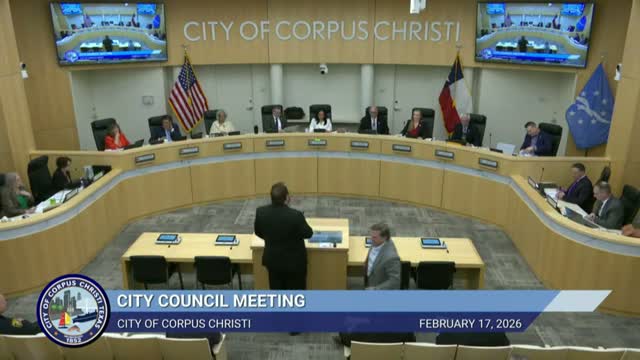
Summary
Council unanimously approved a resolution urging federal action to preserve workload and skilled jobs at the Corpus Christi Army Depot, backing amendments to the NDAA, right-to-repair language, and additional military construction funding to sustain depot workforce and capabilities.
The City Council voted to approve a resolution urging congressional leaders and the Department of Defense to act to preserve and restore workload at the Corpus Christi Army Depot (CCAD).
Ryan Skrabarczyk, the city's director of intergovernmental relations, told the council the resolution seeks to press for several policy changes: restoring a full 50% of helicopter maintenance workload to CCAD, advancing right-to-repair and technical-data provisions that allow the depot to perform required work, equalizing Defense Logistics Agency (DLA) surcharges that disadvantage CCAD, and funding military construction to complete depot modernization projects. "Principally are requiring the military to bring back a full 50% of all the helicopter work back to the army depot," Skrabarczyk said while summarizing the resolutions aims.
Public comment and local business leaders echoed the resolution's importance. Kristen Cook, Executive Director of the South Texas Military Task Force, and other local stakeholders described CCAD as a major local employer and urged sustained messaging and collective advocacy to the congressional delegation.
Councilmembers emphasized coordinated messaging and multi-organization outreach. The resolution passed unanimously; council members said they would campaign for support among state and federal delegations and partner organizations to press the amendments and funding requests in the upcoming legislative cycle.
Next steps: staff and community partners will coordinate an outreach and education campaign to promote the resolution's requests to the Texas congressional delegation and the House and Senate defense appropriations and authorization processes.