Get Full Government Meeting Transcripts, Videos, & Alerts Forever!
Get email alerts on the Master Facilities topic
No spam. Unsubscribe anytime.
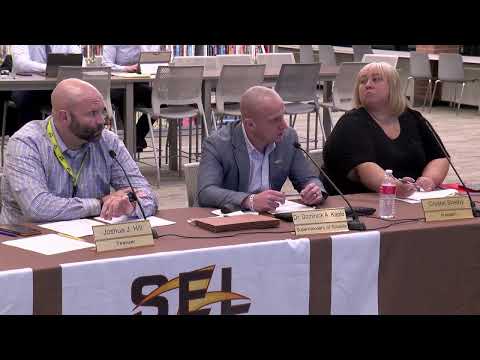
South Euclid‑Lyndhurst board hears multi‑phase master facilities plan, approves related contracts
Summary
Board members heard a detailed presentation on a four‑phase master facilities plan that prioritizes urgent HVAC, roofing and masonry repairs and seeks contractor approvals for work at Southland and the district PAC; staff said some Phase 1 work was undertaken regardless of the levy and that larger upgrades depend on levy funding.
Lee Fuller, the district’s business director, outlined a multi‑phase master facilities plan to the South Euclid‑Lyndhurst Board of Education on Feb. 10, describing four phases split into “a” and “b” segments and a procurement process designed to produce comparable contractor bids.
Fuller told trustees that "Phase 1a started before we even passed the levy," and that some work — described as essential — would have been done whether the levy passed or not. He listed completed and in‑progress repairs at Brush High School, including replacement of HVAC equipment, exterior masonry repairs and a steam‑header repair on the third floor that had been causing steam and water to enter lower floors.
The presentation included photographs of damage, site‑specific needs and examples of the district’s decision‑making process. Fuller described Phase 1b as including Memorial Gym roof replacement and roof work at Roland’s second- and third‑grade wings, with contracts already bid and a contractor selected for work planned in 2026. He said the district is partnering with Ameresco as project lead and Tremco for specialty roofing work, and noted that contractor choices sometimes include CentiMark and TeamCraft.
Superintendent Dr. Capel framed the facilities work as part of the district’s strategic planning, saying the final strategic plan is expected in July or August and stressing implementation: "this is not gonna be a plan that sits on the shelf." He credited Fuller and his team with pulling certain projects out of larger contracts and said that, by doing so, they saved the district a significant sum — Fuller’s team, Dr. Capel said, “saved us over I don't have the official number, but well over 1000000 dollars.”
Fuller detailed the stakeholder engagement framework the district will use for design decisions: decision authorities (the board, cabinet, superintendent, treasurer and at times architects/engineers), essential contributors (program chairs and affected staff), primary contributors and inform/consult groups. He said the district will use active invitations and website updates and provide quarterly updates to stakeholders.
Staff asked trustees for approvals on work packages discussed in the presentation, specifically roofing and window work at Southland and roofing at the PAC. The board approved the business items on the agenda (items 10.1–10.7), which staff said included those contracts, after a motion, second and roll‑call votes.
Fuller cautioned that some upgrades proposed for athletic or specialized spaces depend on structural feasibility; for example, adding locker rooms on Brush’s third floor will require engineer evaluations to confirm load capability. He said certain sequencing decisions are driven by seasonal constraints (exterior masonry and roof work) and by the need to minimize disruption to instruction.
Next steps: Fuller said the district will continue the bid‑review process, work with engineers and architects to finalize feasible options, and maintain public documentation of scopes and timelines on the district website.
Ending: The board approved the related business items and instructed staff to proceed with the contracted work packages. The master facilities plan remains subject to design, bidding and seasonal scheduling, and larger elements will proceed as funds and structural assessments permit.