Get Full Government Meeting Transcripts, Videos, & Alerts Forever!
Get email alerts on the Firefighter Cancer topic
No spam. Unsubscribe anytime.
Senate panel narrows firefighter cancer benefit timing; sponsors say more change may be needed
Summary
Committee approved CS for SB 984 to clarify firefighter cancer benefits, creating a one‑time $75,000 death benefit (with a one‑year eligibility window) and a one‑time $25,000 disability payment for qualifying diagnoses; sponsor and firefighter groups said they are open to expanding timelines but lack statewide actuarial data in committee record.
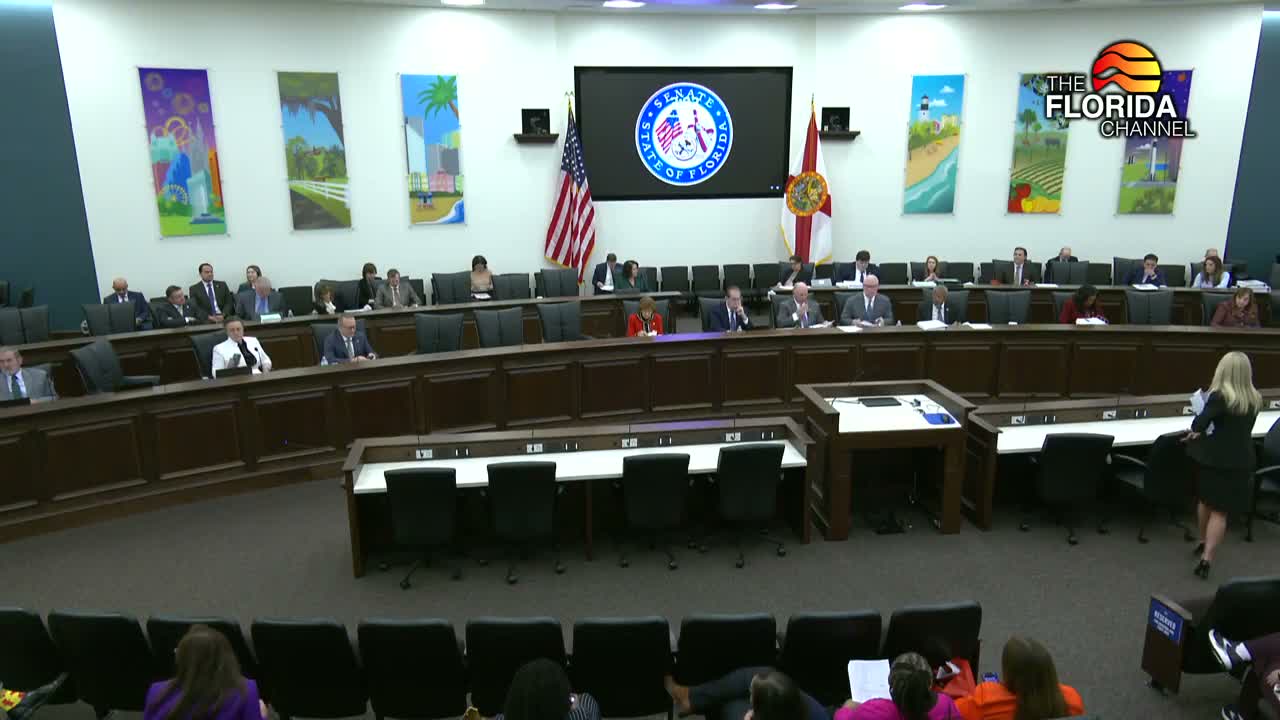
The Appropriations Committee advanced CS for SB 984, which makes targeted changes to Florida’s firefighter cancer law intended to clarify eligibility and payment timing for families and firefighters.
Senator DeSigley, the bill sponsor, said the measure "clarifies firefighter families have access to the death benefit for 1 year after terminating employment" and that language was tightened in a late‑file amendment to ensure the cash benefit is paid only once. Under the committee substitute, a one‑time death benefit of $75,000 is available to beneficiaries in a narrowly defined post‑employment window; the bill also preserves a one‑time $25,000 payment for qualified diagnoses within an applicable period.
Several senators—including Senator Pizzo—pressed for data showing how many payments have been made historically and how a one‑year window would affect families and local government costs. Firefighter representatives and witnesses described cases in which a worker died more than a year after leaving active duty and urged a longer eligibility window; Dr. Elio Perez, a Metro Dade Fire Rescue lieutenant, said a one‑year deadline "doesn't reflect how cancer works" and cited an example of a member who died 414 days after leaving the job.
Sponsors and association representatives said the change is narrowly tailored to address end‑of‑life clarity and that broader expansions could be considered later, preferably with actuarial analysis and potential insurance or pooled solutions for local governments. The committee adopted the sponsor’s clarification amendment and reported the bill favorably.