
Senate committee advances elections bill requiring documentary citizenship checks amid broad public opposition
Get AI-powered insights, summaries, and transcripts
Subscribe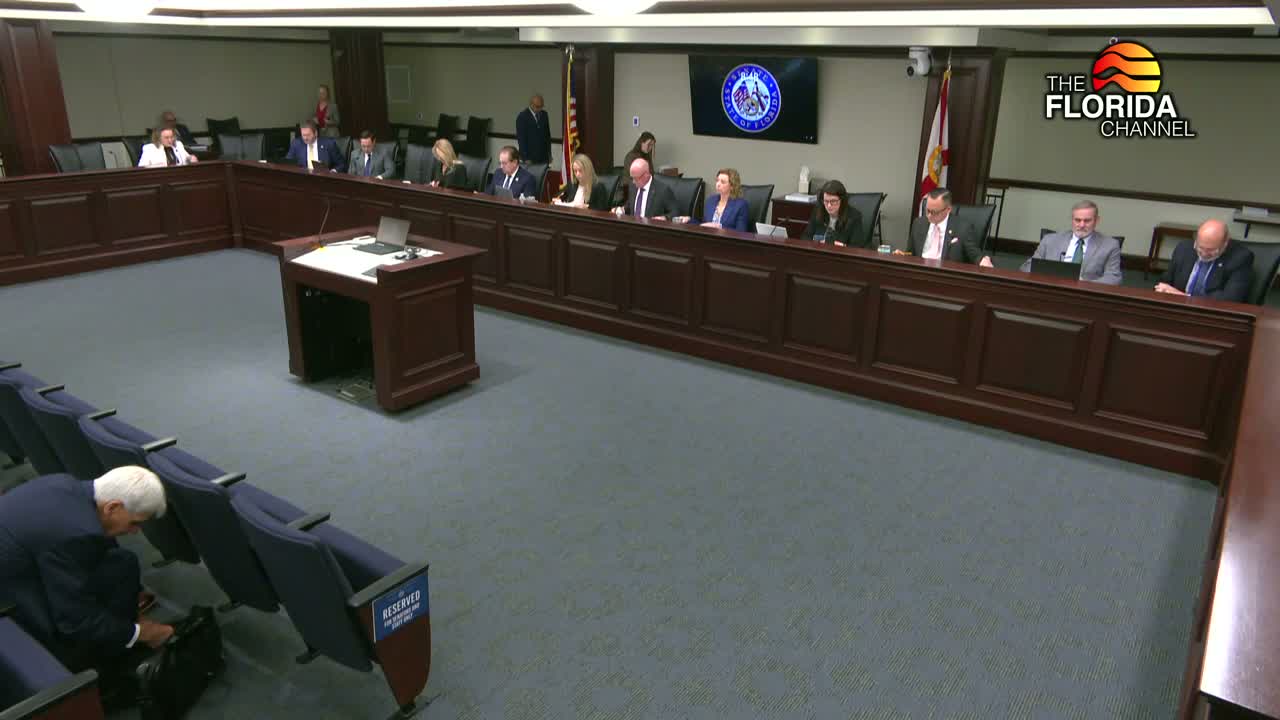
Summary
CS/CS SB 13-34, which emphasizes Real ID reliance, requires documentary proof of U.S. citizenship in certain registration or verification circumstances and marks driver credentials; the appropriations committee reported it favorably after extended questioning and large public testimony opposing the bill as burdensome.
CS/CS Senate Bill 13-34 advanced from the Appropriations Committee after extended debate over implementation, fiscal impacts and voter access.
Senator Grohl, the bill sponsor, said the bill (effective July 1, 2026) would update statutory provisions to allow supervisors and state agencies to verify citizenship using existing Real ID‑validated data, to prioritize pen‑and‑paper ballots as the primary method for voting, and to create document definitions and procedures for cases where automatic verification is incomplete. "If they have already given this information to DHSMV and they have a Real ID, they don't need to give it again," the sponsor said.
Committee members repeatedly pressed how sensitive documents would be submitted, stored and authenticated. The sponsor said supervisors would document the type of evidence presented but would not scan or retain copies; provisional ballots that require proof would generally require in‑person evidence submission.
Lawmakers raised operational concerns: supervisors of elections and the Department of Highway Safety and Motor Vehicles (DHSMV) may need system updates, new intake protocols for sensitive documents and staff training; several senators called the bill an unfunded mandate and said the July 2026 effective date is rushed for an election year. Senator Smith warned the measure could push students, seniors, homeless voters and disabled voters into burdensome verification processes.
A large and sustained set of public comments opposed the bill. Speakers included student groups, civic organizations, Common Cause, the League of Women Voters and civil‑rights advocates who said the bill risks wrongful purges, increased administrative cost and disproportionate harm to vulnerable voters. In turn, some witnesses and individual commenters urged safeguards against noncitizen voting and supported stronger verification.
The committee adopted two late technical amendments that clarified definitions and removed an outdated cross‑reference. After debate and public testimony the committee reported CS/CS SB 13-34 favorably on a roll call. Sponsors and supporters said the bill streamlines verification for most Floridians by relying on existing Real ID and SAVE database cross‑checks; opponents said the bill would create new barriers and impose costs that were not funded in the measure.
The bill will advance for further consideration; the committee record shows extensive questions on system integration and costs that the sponsor said she would follow up on with supervisors and state agencies.