
Senate committee advances bill to standardize transit‑oriented development zoning
Get AI-powered insights, summaries, and transcripts
Subscribe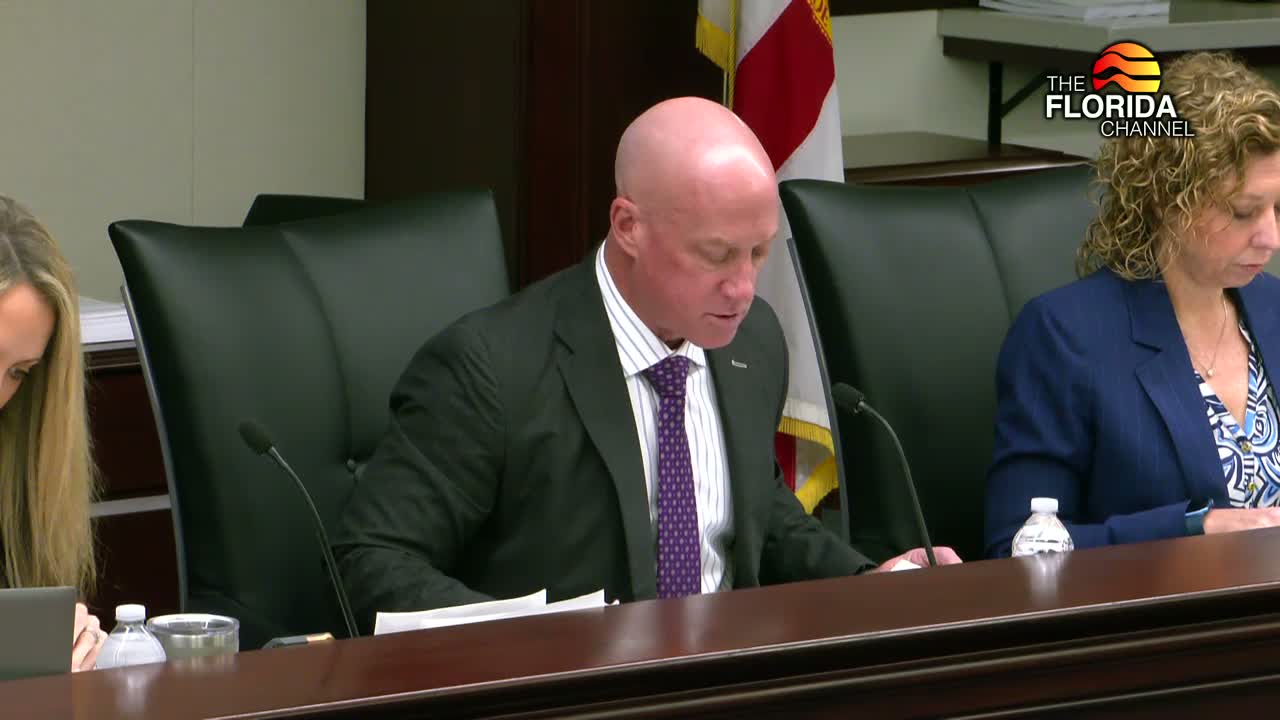
Summary
A Florida Senate appropriations committee reported CS/CS SB 13-42 favorably after adopting an amendment that narrows scope, exempts sensitive properties, and aligns definitions with existing statute. Supporters said the bill encourages housing near major transit corridors; cities warned it preempts local planning and risks infrastructure shortfalls.
CS/CS Senate Bill 13-42, a measure to expand and standardize transit‑oriented development (TOD) rules, advanced from the Senate Appropriations Committee on Transportation, Tourism, and Economic Development on Wednesday after the panel adopted an amendment narrowing the proposal.
Senator Russon, the bill sponsor, said the proposal applies principles from the Live Local Act to areas served by fixed transit systems such as bus rapid transit, commuter rail and streetcars. "When the state sets clear standards and removes unnecessary barriers, housing gets built," Russon said, arguing TOD rules should target corridors where the state already has committed infrastructure.
An amendment explained by Senator Roussaint tightened definitions and aligned key land‑use terms with section 163.3164 of Florida law; it removed a private cause of action and exempted historically designated properties, certain environmentally sensitive areas and military installations from the bill’s requirements. Roussaint said the change was intended to make the bill apply specifically to land‑use and development regulations, not every local rule.
Supporters at the hearing emphasized housing supply and the potential to maximize state transit investments. Max Goldstein, a Broward County resident, said state subsidies for systems such as Tri‑Rail make concentrated growth around transit corridors fiscally sensible. Ari Bargiel, senior attorney at the Institute for Justice, framed the bill as restoring property‑owner freedom and reducing cost‑inflating restrictions near transit.
Municipal officials and local leagues urged caution. Rebecca O’Hara of the Florida League of Cities said the bill could rezone large areas "with no public hearings" and impose uniform density rules that conflict with locally tailored TOD plans, raising concerns about whether new growth would pay for roads, sewer, schools and emergency services. Michael Howard of the Suncoast League of Cities asked for exemptions or reduced height rules for barrier islands and communities with limited evacuation infrastructure.
The committee adopted the amendment by voice vote and reported the bill favorably on a roll call. The sponsor said the measure does not mandate development, remove safety standards, nor strip all local planning authority, but rather seeks to reduce regulatory barriers where transit infrastructure already exists.
The bill will move to its next committee stop for further consideration.