Get Full Government Meeting Transcripts, Videos, & Alerts Forever!
Get email alerts on the Procedural Rules topic
No spam. Unsubscribe anytime.
Council debate over codifying prayer at meetings highlights tension between tradition and constitutionality
Summary
Council members debated Resolution 26-026 to amend procedural rules to address commencement practices; proponents said a moment for prayer or silence reflects constituents’ wishes, while others raised constitutional and inclusivity concerns. No final vote is recorded in the transcript excerpt.
On Feb. 10 the Administrative Finance Committee discussed Resolution 26-026, a proposed amendment to council procedural rule No. 4 addressing how meetings commence.
Council President Monique Williams Johns urged recognition of constituent requests for prayer or a moment of silence and framed the proposal as responsive to more than 600,000 residents. "If you all don't want prayer, that's up to you," she said, adding the change would reflect constituent preference rather than personal preference.
Councilwoman Durham said she is uncomfortable with codifying an explicit prayer in the rules and urged the council to follow constitutional precedent; she suggested a rotating schedule like the state legislature if the body wants formal invocations. "Unless we're going to handle it the way the constitution and the courts have decided," Durham said, "we need to tread very carefully."
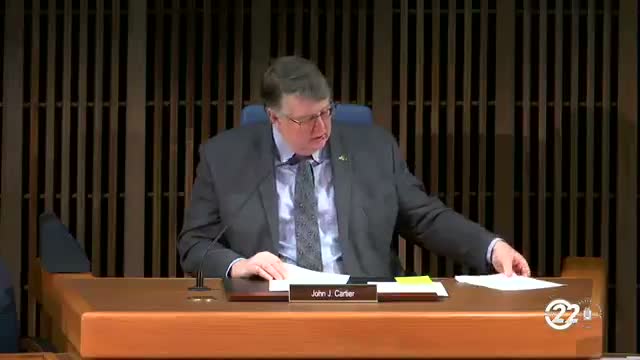
Other members defended codifying the existing practice of a brief, neutral moment of silence. Councilman Smiley said the moment of silence has been a long-standing, inclusive norm in the chamber and that codifying it preserves a neutral practice that allows individuals of any faith or none to reflect privately. Councilman Carter said the moment of silence permits all religions equal opportunity to observe and opposes privileging a specific prayer.
The discussion in committee was framed as a procedural clarification rather than an imposition of a particular religion; members who supported codification emphasized protecting diverse constituents and preventing unilateral deviations from established practice. The transcript does not record a committee vote on the resolution; staff reported no public comment on the item online during the meeting.