
New Castle County police say they will not assist ICE with immigration enforcement
Get AI-powered insights, summaries, and transcripts
Subscribe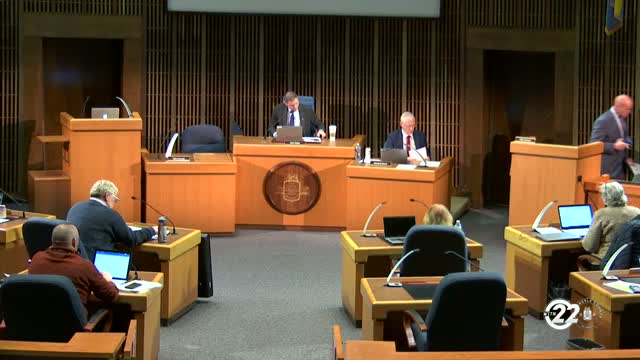
Summary
At a Feb. 10 county meeting, Colonel Leonard said New Castle County Police "do not engage with ICE on immigration related issues," described one recent verification call, and outlined planned community outreach led by the Office of New Americans to explain local roles and resources.
Council members raised public concerns about U.S. Immigration and Customs Enforcement activity in Delaware during the Feb. 10 meeting of the New Castle County Public Safety Committee.
Colonel Leonard said the county police department follows a Chiefs Association position not to assist ICE with immigration‑related enforcement. "The policy that we have within the division is that we, we do not engage with ICE on immigration related issues," he said, adding that the department has had very limited contact with ICE in the last year.
Leonard described a recent incident in the county in which police were notified that ICE personnel were on site; officers verified identities and paperwork and documented the interaction in the CAD system but did not assist with immigration enforcement. He said the department will respond if there is violence or an assault on officers, but will not engage to carry out federal immigration actions.
Council members said they have received calls from anxious residents and urged vigilance. Councilman Street said fear in affected communities is "genuine" and asked the department to remain watchful. Councilman Hollins raised concerns about agents lacking visible identification and asked how residents could distinguish lawful officers.
To address community concerns, Leonard said New Castle County and the Office of New Americans are preparing a multilingual one‑pager and a series of town halls, to be led jointly by the Office of New Americans, the Delaware State Police and local police, outlining what residents should expect from local law enforcement regarding immigration‑related incidents.
On procedure, Leonard said officers will verify ICE credentials when requested and will not interfere with legitimate federal actions. He also noted narrow, legally required notifications to federal authorities for certain nationalities in specific cases and said such notifications are rare.
The committee did not adopt new policy at the meeting; members requested follow‑up materials and public outreach details.