Get Full Government Meeting Transcripts, Videos, & Alerts Forever!
Get email alerts on the Ethics And Conflicts topic
No spam. Unsubscribe anytime.
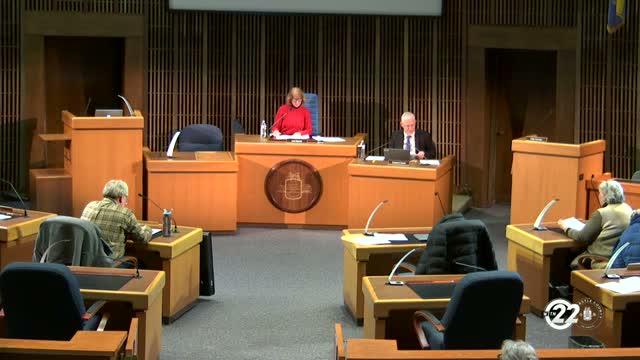
Ethics training prompts debate over developer contributions and recusal rules at New Castle County council meeting
Summary
Ethics commissioner Johanna Bishop led mandatory training for New Castle County council on conflicts of interest, recusal and gift rules; the presentation was followed by a contentious debate about whether campaign contributions from developers should be limited and who enforces such rules.
Johanna Bishop of the New Castle County Ethics Commission delivered the subcommittee’s mandatory ethics training on Jan. 20, reviewing the county ethics code, required financial disclosures, recusal procedures, gift rules and the ‘appearance of impropriety’ standard. The presentation prompted questions from council members about campaign contributions from developers and the commission’s authority to address them.
Bishop emphasized core principles of public service and disclosure. “Public service is a public trust,” she told the council, urging members to use the commission’s advisory opinions and to document decisions when conflicts arise.
Bishop and Ethics Commission chair Robert Hicks explained how the commission operates, including that it issues advisory opinions, enforces the ethics code where violations are proven, and is composed of appointees from council and the county executive. Hicks said campaign‑finance enforcement often falls outside the commission’s authority because courts have characterized campaign contributions as protected political speech. “Campaign contributions are free speech, and therefore it’s difficult for us to act in that area,” Hicks said, noting state elections authorities and the courts limit local action on contributions.
The training moved into a prolonged Q&A after a council member asked whether jurisdictions can bar developers from contributing within a set period before elections. Some council members argued for stricter limits or better disclosure; others warned that county action would likely be preempted by state law and that disclosure rules, not contribution bans, are the more practicable local remedy. Several members urged improving reporting systems and asked the Ethics Commission to consider taking on additional transparency duties where legally permissible.
The discussion became heated as council members exchanged personal criticisms while debating remedies. At one point a council member said, “I don’t care if Jay Street doesn’t like what I’m saying,” during an extended back‑and‑forth on whether contributions create an appearance of impropriety. The chair and others moved to restore order and the meeting concluded shortly afterward.
Bishop closed by encouraging officials to seek advisory opinions in advance of potentially fraught decisions and to err on the side of disclosure and recusal. The Ethics Commission chair reminded members that documentation and transparency are the tools the commission uses to manage conflicts and that some campaign‑finance questions are ultimately matters for state law or the Department of Elections.
The subcommittee adjourned following the exchange.
No formal ethics enforcement actions were taken at the meeting; the council and the commission agreed to follow up on disclosure and reporting procedures where jurisdiction allows.