Get Full Government Meeting Transcripts, Videos, & Alerts Forever!
Get email alerts on the Data Centers topic
No spam. Unsubscribe anytime.
Residents, unions and watchdogs press council on Project Washington and seek moratorium or stronger rules
Summary
Dozens of residents, union representatives and local watchdogs spoke during public comment about a proposed hyperscale data center (Project Washington) and developer Starwood, urging either support with labor conditions or a moratorium and stricter local controls on noise, water use and environmental impact.
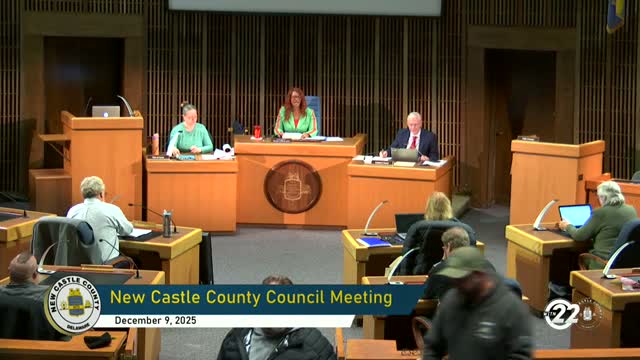
A prolonged public‑comment period at the New Castle County Council meeting on Dec. 9, 2025 focused on Project Washington, a proposed hyperscale data center development promoted by Starwood Digital Ventures (a Starwood Capital Group affiliate). Speakers included union representatives who emphasized job and apprenticeship opportunities and community members who warned about environmental harm, tax breaks and developer transparency.
Union representatives cited construction and long‑term maintenance jobs for local trades and endorsed substitute ordinance language adding protections such as noise limits (including low‑frequency controls), closed‑loop cooling to reduce potable water use, and utility coordination to minimize outage risk. “This project will put IBEW Local 313 electricians to work for many years,” one union speaker said, urging council to proceed with labor standards tied to approvals.
Other commenters pressed for a moratorium on AI‑scale data centers until the county receives verified data on water and energy use, tax revenue projections, and environmental safeguards. One resident urged council to use a moratorium to force the developer to the table: “Starwood needs us,” she said, arguing the county has leverage on land use and tax terms.
Speakers from community groups raised concerns about Starwood’s corporate and financial record, potential tax exemptions that can reduce public revenue, and the adequacy of public forums where utility, water and grid operators were not present. Several asked whether developers would be required to use closed‑loop cooling, non‑potable water sources or onsite generation controls and questioned whether long‑term operational jobs would be sufficient for local residents.
Council took no final action on Project Washington at the meeting. Earlier in the evening, Councilwoman Durham moved to table Ordinance 25‑094 (changes to open‑space/common‑facilities provisions related to plan changes), and that ordinance was tabled. Councilmembers acknowledged competing priorities: some urged rapid economic development and union job opportunities, while others said more data and enforceable local controls are necessary.
The record shows a mix of organized labor, residents and civic groups presenting technial suggestions (noise targets, closed‑loop cooling, utility coordination), policy demands (moratorium, transparency on subsidies and tax deals) and requests for stronger permit conditions tying labor and environmental protections to approvals. Council signaled further deliberation would continue in the coming months.