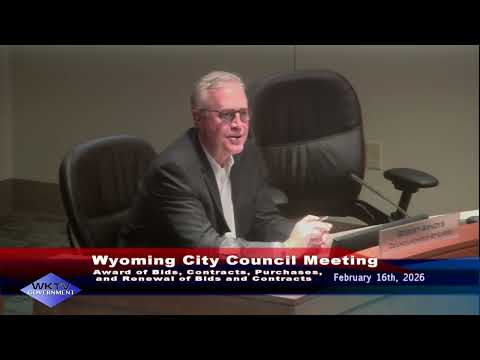
Wyoming council approves $172,000 biosolids evaluation as city weighs pipeline option with Grand Rapids
Loading...
Summary
The council voted to hire a consultant to evaluate biosolids screening, pipeline condition and nutrient-management changes after a pilot sending sludge to Grand Rapids; staff said the study (about $172,000) will determine what plant upgrades are needed and could take about six months for pipeline screening work.
Wyoming City Council approved a roughly $172,000 contract to study biosolids handling and nutrient-removal resiliency at the city’s wastewater treatment plant, a step staff said is needed before committing to longer-term disposal through a Grand Rapids processing facility.
City staff presented the evaluation, saying the city has been piloting sending biosolids through an existing pipeline to the Grand Rapids treatment plant under the Grand Valley Regional Biosolids Authority (GVRBA). ‘‘Part of what this study here before you is is, Grand Rapids has indicated the biosolids that we have may not be as thoroughly screened from debris as they would want it to be,’’ a city staff member said, explaining the consultant would analyze screening needs, inspect the pipeline and recommend nutrient-management pilot testing.
Why it matters: staff told the council the alternative—building a local digester or dryer—would carry tens of millions in upfront capital costs. The study is intended to identify the level of screening and other investments the city would need to meet Grand Rapids’ acceptance standards and to estimate ongoing disposal costs so the council can make an informed long-term decision.
What staff said: the consultant (Donahue) was recommended because it has prior work with Grand Rapids and recent design experience with the Wyoming plant. Staff estimated the pipeline screening and inspection work would take about six months; the nutrient-management tests would require additional pilot work and additional time.
Council questions and staff responses: several council members asked whether the city could adopt other municipalities’ screening solutions instead of paying for an evaluation; staff replied sludge characteristics differ by community—Wyoming’s solids reflect local industrial and agricultural customers—and that consultants provide plant-specific design and operational insight. Staff also said they would research what screens other plants use and include site visits and trade-show reviews as part of the evaluation.
Next steps: the council approved the evaluation; staff said the consultant work will inform a potential long-term agreement with Grand Rapids and identify necessary investments on Wyoming’s side before committing to continued disposal through the pipeline. The council’s vote was recorded during the meeting and the item advanced to implementation work by staff.