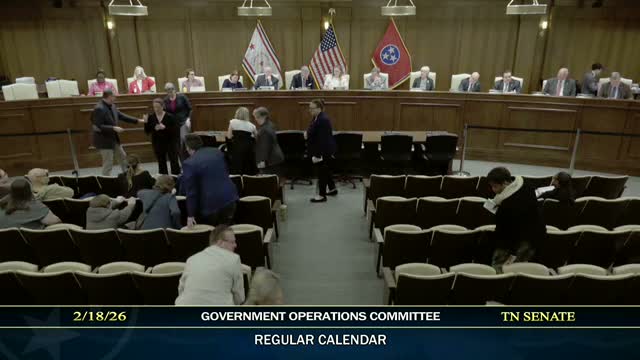
Panel approves bill to restore state oversight where counties lack functioning ethics boards
Loading...
Summary
SB 2,257 would return ethics oversight to the state ethics commission when a county lacks a functioning ethics board; sponsor cited Shelby County’s absence of a functioning board and a recent corruption plea for motivation. Committee recommended it to State and Local (7 ayes, 2 nos).
Senate Bill 2,257 would require that when a county does not maintain a functioning local ethics board (defined as at least five voting members plus a non‑voting ethics officer), oversight reverts to the state ethics commission until the county forms its own board.
Sponsor Senator Taylor said the measure is aimed at counties without functioning boards, citing Shelby County’s 2018 change and a recent county commissioner guilty plea as evidence of a local oversight gap. Senator Sandra Oliver asked whether the bill duplicates the Tennessee Bureau of Ethics’ role; the sponsor said the bill is designed specifically to revert authority to the state only when a local board is not functioning, not to create a parallel process when a local board exists.
The committee voted 7 ayes and 2 nos to send SB 2,257 to the Senate State and Local Committee with a positive recommendation. The transcript contains no fiscal analysis and does not record additional enforcement mechanics beyond reverting oversight to the state in the absence of a county board.