Get Full Government Meeting Transcripts, Videos, & Alerts Forever!
Get email alerts on the Regulatory Reform topic
No spam. Unsubscribe anytime.
Subcommittee backs administration bill to modernize licensing boards, despite procedural concerns
Summary
Senate Bill 2,224 would restructure and consolidate several licensing boards, allow surety bonds for contractors, adjust real‑estate education windows and remove certain occupational licensing; committee advanced the bill after a clerk consultation about Rule 24 (6 ayes, 2 nos).
Leader Johnson presented Senate Bill 2,224 as an administration bill intended to streamline and modernize Tennessee’s regulatory statutes overseen by the Department of Commerce and Insurance. The sponsor said the measure would reduce duplicative requirements, merge certain boards (for example, land surveyors with architects and engineers), allow associate engineer board members to review applications, permit surety bonds as an alternative to audited financial statements for contractors, and remove licensing requirements for polygraph technicians.
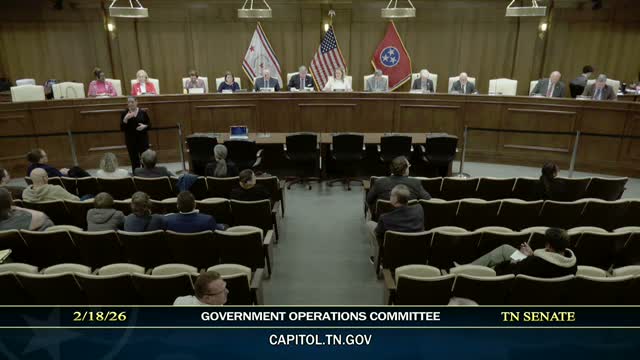
Senator Sandra Oliver raised a point of order questioning whether SB 2,224 violated Senate Rule 24 because it addresses multiple subject areas; the committee recessed briefly to consult the clerk’s office, and the clerk confirmed the bill met the rule and proceedings resumed.
Members expressed concern that many of the boards had already been through summer Q&A and sunset hearings and that last‑minute consolidation limited the committee’s ability to fully vet the changes; several senators nevertheless indicated support and the committee recorded six ayes and two nos, advancing the bill to the Commerce and Labor Committee.
The department’s legislative director, Candace Dawkins, told the committee the bill was part of the administration’s legislative proposal and stakeholders are continuing to work on particular elements as the bill moves forward. The committee did not record implementation cost estimates during the hearing.